

There is an odd sort of dress rehearsal going on somewhere in a flooded quarry in Gloucestershire. A British company called Deep is getting ready for something that, until recently, remained firmly in the realm of science fiction. Engineers lower test modules into the murky green water, and divers circle them. They hope to have a permanent human presence on the ocean floor by 2027. Not a quick visit. Not a joke. a home.
Ten years ago, this kind of ambition would have prompted courteous eye-rolls. However, the discourse surrounding extreme environments has changed. The seabed has quietly and unexpectedly returned to serious conversation, while the majority of the noise still revolves around Mars and the Moon. The oceans, which make up the majority of the planet and are still largely unmapped, seem to be receiving the attention they have long deserved.
Two habitats are at the heart of Deep’s strategy. Three-person crews are intended to use the smaller Vanguard for brief visits. The larger one, the Sentinel, is the real star of the show. It is a 16-meter capsule with living quarters, labs, and bedrooms that can hold scientists for up to 28 days at a time at depths of up to 200 meters. Sitting inside a pressurized tube and watching the light fade above you is a long time. It’s another matter entirely whether the typical researcher can bear the psychological burden of it.
Of course, there are precedents. NASA has been sending people to the Aquarius Reef Base off the coast of Florida since 2001, and Jacques Cousteau started experimenting with underwater living in the 1960s. However, those stays seldom last longer than two weeks. The technology and a steadily expanding body of evidence that humans might succeed down there are what have changed.
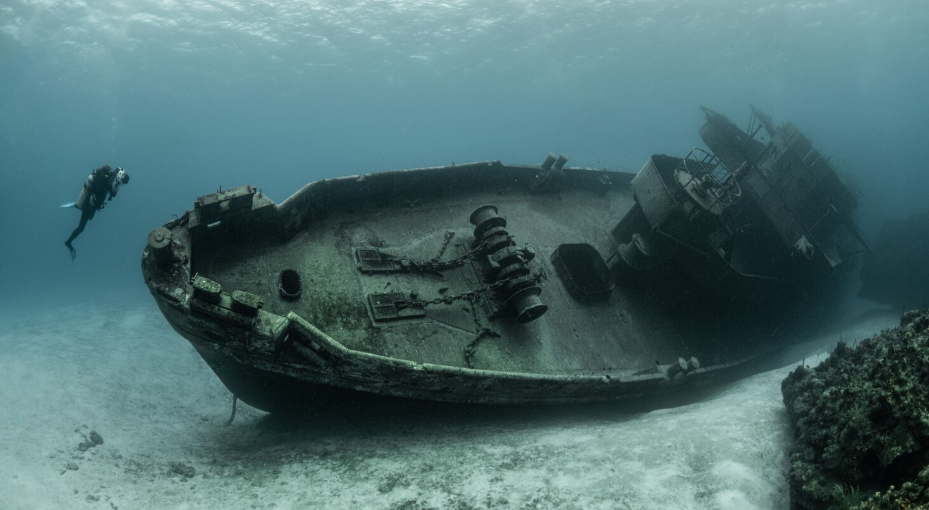
Think about Rudiger Koch, a German aerospace engineer who spent 120 days in a capsule that was submerged 11 meters below the Caribbean Sea last year. By all accounts, he emerged unharmed. He celebrated with champagne and a cigar, which is either a very European reaction to surviving underwater life or a potent endorsement of it. At about the same time, Professor Joseph Dituri spent 100 days in a lagoon lodge in Florida and returned with measurable improvements in his health, including increased testosterone, better sleep, reduced inflammation, improved cholesterol, and improved cognitive function. His biological age decreased by about ten years. Additionally, he lost roughly one centimeter of height, which appears to have been quietly compressed out of him by the pressured environment.
The difference with astronauts is difficult to ignore. You return from a year on the International Space Station with smaller muscles and thinner bones. You return, in some way, younger after spending several months under pressure at sea. No one knows for sure why. The variables are complicated, the science is early, and the sample size is small. However, researchers want a much larger data set because the pattern is so intriguing.
Deep’s Sentinel can help with that. The company’s director of scientific research, Dr. Dawn Kernagis, notes that the journey up and down poses a greater risk than living at depth. decompression sickness, fluctuating pressure, and compressed gas. In fact, keeping researchers down for longer periods of time lowers that risk and frees up much more time for real science, such as mapping seamounts, studying the ecosystems of the deep ocean, and observing how climate change is affecting places that no human has ever properly seen.
And witnesses are desperately needed in the deep ocean. The pilot of the Limiting Factor submersible noticed a plastic bag when it descended to the bottom of the Mariana Trench. More than any chart, that picture conveys the extent to which we have explored even uncharted territory. The oceans make up more than 90% of the planet’s habitable space, and the majority of it is still uncharted. Now, sending people to live there, even for a short time, feels more like overdue housekeeping than ambition.
It is unclear if Deep will meet its 2027 goal. However, the direction of travel is clearly visible. The ocean floor is turning into a frontier once more, and we may decide to stay this time.
