

When investors lose faith in an energy market, a certain kind of silence descends upon it. That’s how Mexico has felt for the majority of the last six years: a nation with exceptional solar radiation and consistent Tehuantepec winds, but with foreign developers silently closing their offices and shifting their funds to Chile, Brazil, or back across the border to Texas. It was evident in the conference circuit, where the number of Mexican panels decreased annually. No one pretended otherwise; something had broken.
Now, and more quickly than most anticipated, that silence is ending. The door has partially reopened under President Claudia Sheinbaum’s National Energy Reform, which was announced in March 2025. 54% of the country’s generation is locked in by the state-owned CFE, while the remaining 46% is now genuinely contestable. It’s a politically cautious compromise. However, for developers who witnessed contracts being rewritten and permits stalling during the López Obrador years, even a partial opening is like fresh air.
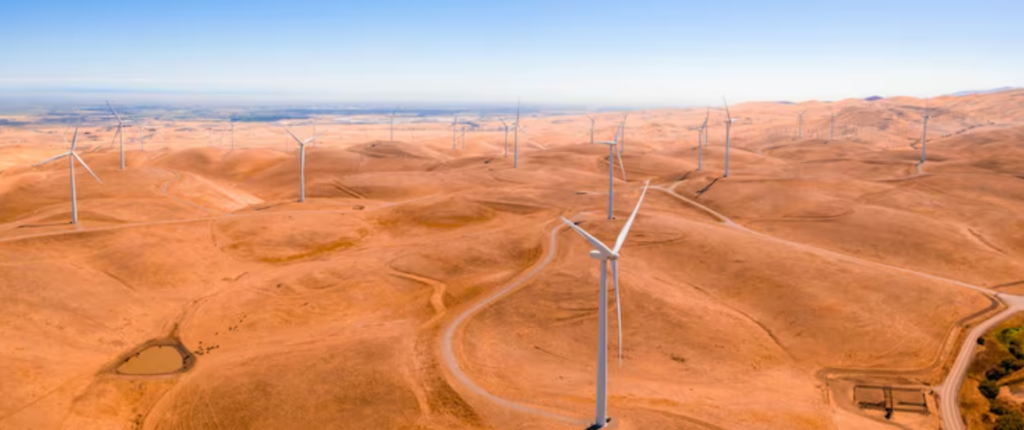
The figures are startling, at least the ones that have been made public. Energy Minister Luz Elena González announced $4.75 billion in private commitments in December for 20 projects, including five wind farms and fifteen solar plants, located in eleven states from Yucatán to Zacatecas. Sener received 98 proposals after requesting them in October. The majority of these projects won’t begin operations until 2028 or 2029, which gives you an idea of how long the pipeline actually is and how patient this funding has chosen to be.
Even the ministry was taken aback by what transpired next. Approximately six times as many proposals were received for a second call in February, which sought 6.5 GW of additional capacity. Invenergy arrived. AES appeared. London-based Cubico submitted. So did EDP, Solarig, Alten, Atlántica, and a Danish fund — Copenhagen Infrastructure Partners — that’s quietly become one of the more aggressive bidders in Latin America.
The National Solar Energy Association’s director, Gilberto Sánchez, told reporters that his phone hasn’t stopped since late February. Suddenly, South American developers searching for their next jurisdiction and European companies from smaller markets were all looking south.
The similarities to Mexico’s long-term auction era, which lasted from 2015 to 2017 and is still regarded as a kind of golden memory by many in the industry, are difficult to ignore. Some of the lowest solar prices ever recorded were obtained through those auctions. The majority of that infrastructure was either built under duress or never built at all after the political winds changed. Details that have not yet been finalized, such as transmission build-out, permitting timelines, and whether CFE can truly take on the projects it has been asked to partner on, will determine whether this new chapter avoids that fate.
The question that frequently comes up in private discussions is the transmission question. In addition to the $2 billion the government has set aside expressly for grid infrastructure, Mexico intends to implement 100 transmission and distribution projects under the Plan César strategy. There will be three more state-built solar plants. However, generation without transmission is just costly scenery, as anyone who has seen a wind farm in Oaxaca sit idle due to the lines’ inability to carry the power will attest.
Beneath the headlines, a regional story is also developing. The Trump administration’s retreat from climate policy has left a gap that both governments appear eager to fill, or at least lean into, which is why Mexico and Canada have been strengthening their clean-energy cooperation through the USMCA framework. The Mexico-Canada Action Plan 2026–2028 appears to be a covert decision by two nations to forgo waiting for Washington. Aguascalientes signed a small efficiency agreement with CONUEE at the state level, but it’s the kind of thing that didn’t happen at all two years ago.
According to reports, Sheinbaum wants another tender completed by June. Publius’ Emiliano Hernández Ochoa stated that before determining how much space is left, the ministry is waiting to see what is awarded in the current mixed scheme. Investors appear to think Mexico is serious this time. It remains to be seen if the politics, bureaucracy, and grid will all survive long enough to validate their claims.
