

Antarctica acted like the quiet student in the back of the climate change classroom for a very long time. Summer after summer, the Arctic was noisy, losing ice in plain sight, and the satellite photos were almost embarrassing in how accurately they depicted the situation. Somehow, Antarctica remained calm. Its sea ice even slightly increased through the late 2000s, providing scientists with a genuine conundrum to ponder and a new topic of discussion in some online forums. It’s difficult to ignore how frequently nature deviates from model predictions, at least until it does so abruptly.
Then, in 2015, the floor started to collapse. By 2023, Antarctic sea ice levels were so drastically below the historical average that scientists found it difficult to characterize them without coming across as alarmist. Finally, a new international study led by Dr. Aditya Narayanan of the University of Southampton and published in Science Advances provides a more precise name for what transpired. The team contends that the cause is more obvious than the field had been prepared to acknowledge. Reading the paper gives me the impression that scientists had been secretly suspecting this for years, but they needed the data to confirm it first.
According to Narayanan, it’s a “triple whammy.” The persistent ozone hole and greenhouse gas emissions intensified the winds that whipped across the continent. Warm, salty water was pulled up from below by those winds. The heat mixed and remained once it reached the surface. The feedback loop became locked in. Ice that ought to have rebuilt just didn’t. In other words, the Southern Ocean shifted into a different state, and there isn’t a clear way to reverse it.
Observing this from a distance, I find it unsettling how the language has changed. For many years, scientists referred to Antarctica as the frozen ballast of the planet, a “buffer,” or a stabilizing force. They are now referring to it as “amplifier.” According to Dr. Narayanan, Antarctica may have transitioned from absorbing the shock of warming to transmitting it and potentially exacerbating it. That is a significant shift in perspective that has implications outside of scholarly publications.
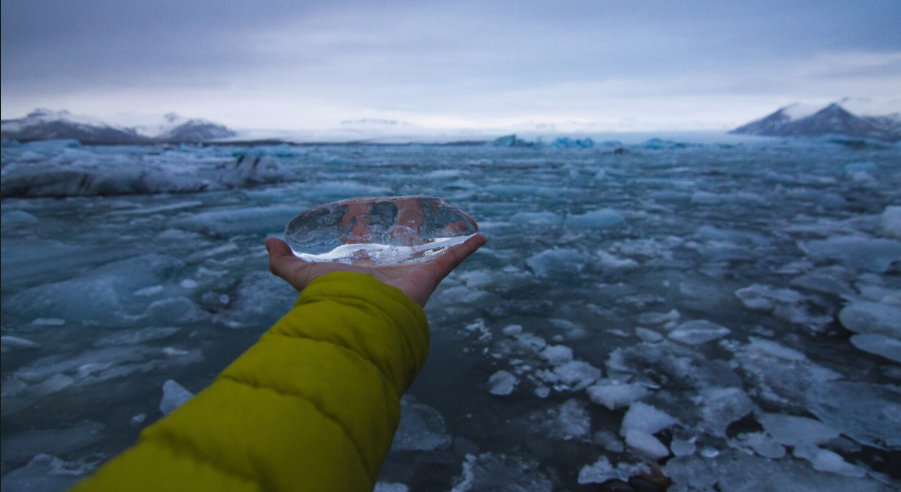
The effects spread outward in ways that are difficult to notice until you get a close-up look. The slow, massive churn of warm surface water moving toward the poles and cold, dense water sinking is known as the global overturning circulation, and it is fueled in part by sea ice. If you tamper with that, you will affect weather patterns thousands of kilometers away. The animals that are closer to home read the warning first. For moulting and breeding, emperor penguin colonies require stable ice from April through December. Chicks froze or drowned during the 2022–2024 collapse before their waterproof feathers came in. In a single season, entire colonies failed. The abstraction of “tipping points” suddenly feels excruciatingly concrete because of this kind of detail.
The permanence of this new state is still up for debate. A few cold years might push the system back, according to some researchers. The feedback loop is currently too warm to permit a recovery, according to others, including Narayanan’s team. To be honest, no one really knows. It is evident that the comfortable presumption that Antarctica was somehow exempt has vanished. The lead author put it this way: “The system flipped, and the rest of us are just starting to understand what that means.”
