

There are creatures somewhere in the South Pacific, about six kilometers below the ocean’s surface, that were around when the last non-avian dinosaurs roamed the planet. They don’t have much drama. They don’t move quickly. By all scientific standards, they have been doing very little for about 100 million years, but they woke up when scientists eventually persuaded them to enter a lab and offered them food. They grew in number. They seemed to be alright.
Knowing exactly what to do with that information is difficult. The University of Rhode Island and a number of other organizations collaborated with the Japan Agency for Marine-Earth Science and Technology to lead an international research project that resulted in the discovery. The sediment samples were taken during a 2010 expedition to the South Pacific Gyre, a massive system of revolving ocean currents that also happens to contain the planet’s most biologically barren, nutrient-depleted open water. The researchers observed that there is virtually nothing to eat there. Perhaps a meter or two of sediment is added to the seafloor beneath it every million years. which, by any human sense of time, is not actually building up at all.
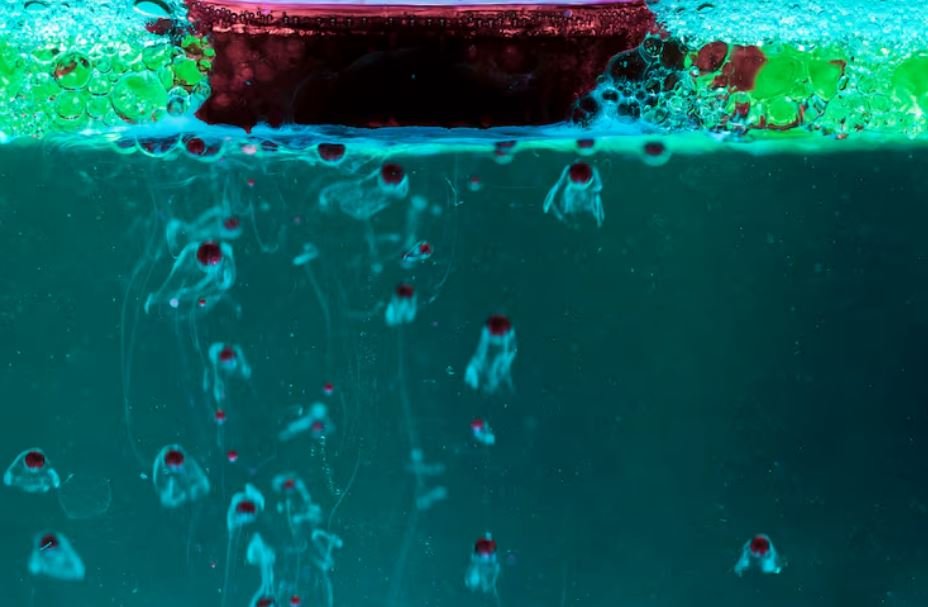
Nevertheless, oxygen had permeated all the way down into the sediment, more than 100 meters below the seafloor and almost 18,000 feet below the ocean’s surface, as it moved slowly through those thin layers over geological timescales. Theoretically, aerobic microorganisms could survive because of that oxygen. In actuality, the researchers wanted to know if theory and reality had finally aligned. Yuki Morono, the lead scientist, acknowledged his skepticism. “At first I was skeptical,” he replied, “but we found that up to 99.1% of the microbes in sediment deposited 101.5 million years ago were still alive and were ready to eat.”
Sitting with that figure is worthwhile. Not a handful of lone survivors barely hanging on. Ninety-nine percent are dormant, waiting, and alive.
The team fed carbon and nitrogen substrates to the old samples back in the lab. Nearly 7,000 cells responded over the course of 68 days, multiplying by four orders of magnitude. The metabolic activity, according to the researchers, was incredibly slow; it wasn’t dormant as we usually think of hibernation, but it was actually metabolizing, albeit at a rate that makes a glacier appear impatient. These organisms seem to have a different sense of time than anything found above the seafloor. According to Morono, they don’t seem to understand the concept of lifespan. The term “zombie state” has been coined by some researchers to describe the state in which they simply go on, consuming the least amount of energy that is available, dividing occasionally, and existing in what may be a more bizarre state.
There are about 10,000 bacteria in a teaspoon of this sediment. In contrast, billions are found in surface soil. It is almost philosophical in its sparseness. These organisms have been quietly existing at the periphery of what biology deems feasible since before the Atlantic Ocean grew to its present width.
The ramifications go far beyond marine biology. The theoretical range of environments capable of supporting biology expands significantly if life can endure for this long under such harsh conditions—near-zero nutrients, crushing pressure, practically no light, and nearly no food. Naturally, this also applies to environments outside of Earth. It is challenging to completely avoid the parallel, but researchers have been cautious not to overstate the astrobiology angle. From a distance, what appears to be a dead world might actually be a very patient one.
The study’s co-author, Steven D’Hondt, an oceanographer at URI, put it simply: “What’s most exciting is that it shows there are no limits to life in the old sediment of the world’s ocean.” That may be the most understated yet outstanding statement in modern science. Given that evolutionary pressure necessitates reproduction, which occurs here on timescales that render the term nearly meaningless, it is currently unclear how these microbes evolved or if they evolved at all. The team is currently investigating those questions.
It is already evident that there has been life down there since the Cretaceous, metabolizing slowly, moving very little, and waiting for nothing in particular. It turned out that the scientists were prepared when they eventually arrived with food.
