

A bus that carried commuters through Colombo’s traffic for decades ends its life on the seabed, gradually becoming home to reef fish and barnacles, in a way that is almost poetic. However, Sri Lanka has been doing just that in secret, and it’s more difficult to ignore than it seems.
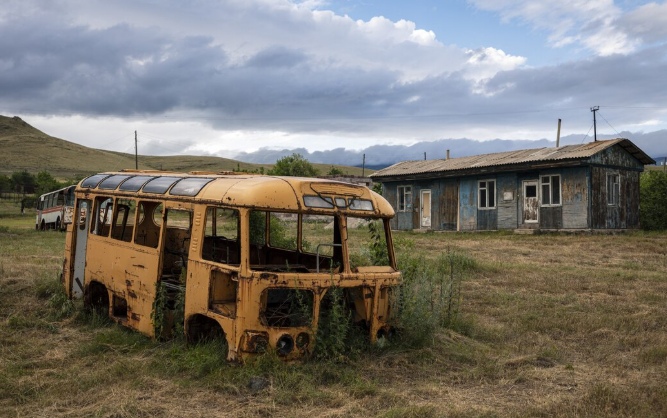
Decommissioned Sri Lanka Transport Board buses were sunk off the island’s northeastern coast close to Trincomalee by Sri Lanka’s Department of Fisheries and Aquatic Resources starting in November 2020. Twenty buses made up the first batch, which was loaded onto navy ships and transported about five kilometers offshore before being lowered into deep water. There were more at Jaffna in the north and Galle in the south, for a total of nearly seventy buses at three locations. Since hundreds of the old cars had been sitting and rusting in yards for years, the department bought them from SLTB depots for a nominal fee.
The director-general of the DFAR, Susantha Kahawatta, noted that the Trincomalee buses were already drawing fish within months and called the initial results encouraging. Anyone who is familiar with how marine environments behave around hard structures won’t be totally surprised by that. There are plenty of shipwrecks along Sri Lanka’s coastline, which have long served as inadvertent man-made reefs around the nation’s waters. Here, the intentionality—as well as the content being utilized—is unusual.
Due to Sri Lanka’s exceptionally small continental shelf, there aren’t many natural areas where fish congregate and breed. The kind of widespread habitat that a fishing-dependent coastal population requires has not been provided by coral coverage, which is already under stress from rising ocean temperatures and human activity. By literally placing hard substrate where none previously existed, the bus project is, in a sense, filling a structural gap.
Artificial reefs have a fairly well-established scientific foundation. The U.S. National Oceanic and Atmospheric Administration, or NOAA, has extensively documented artificial reef programs, pointing out that hard surfaces immersed in suitable depth ranges and water temperatures can support colonization by algae, followed by invertebrates, and finally fish populations attracted to food and shelter.
Although the agency has also raised concerns about inappropriate materials leaching contaminants, NOAA’s guidance generally supports the method when materials are non-toxic and properly deployed. It’s worth sitting with that final point. Even when an old bus is submerged, paint, rubber seals, lubricants, and metal parts are still present. It doesn’t seem to have been made public whether the SLTB buses were stripped or cleaned prior to sinking, and it’s still unclear how thoroughly that issue was investigated.
Even after taking into consideration some material degradation, the environmental calculus might still favor sinking. The sites were carefully chosen, the ocean is vast, and the initial ecological reaction seems to be favorable. However, the lack of long-term monitoring data, or at least data that is accessible to the public, creates a gap that is difficult to overlook. It’s not always clear what the reef will look like in year fifteen based on what’s working in year one or two.
From the outside, it appears that Sri Lanka is making clever use of what it has: outdated buses, a cooperative navy, and a fisheries department prepared to adopt a novel strategy. It’s not a critique. Conservation doesn’t always wait for ideal circumstances or limitless financial resources. A local environmental organization called Pearl Protectors publicly applauded the endeavor, and if fish stocks do recover near these locations, coastal fishing communities stand to gain significantly.
Data that hasn’t been fully gathered yet will likely determine whether this becomes a replicable model for other island countries with comparable shelf conditions or a warning about handling materials. For the time being, a rusting bus off the coast of Trincomalee is quietly growing things, something it has never done on land.
