

When something significant is taking place just out of sight, a certain kind of silence descends upon a zoo enclosure. That silence has a name at Hampshire’s Marwell Wildlife. Her name is Zaya, and she gave birth early on Wednesday, May 20, somewhere inside a dark cubbing box that no one can actually see into—not even her keepers.
In a way, it’s a strange kind of news story because the main fact is still up for debate. Marwell has not disclosed Zaya’s cub count. They can’t just yet. The team has opted to rely on something more traditional: watching, listening, and trusting Zaya’s instincts over their own curiosity. The cubbing box lacks a camera, in part because it would be useless given how dark it stays inside.
In my opinion, the true story here is that restraint. With something as visually appealing as a snow leopard cub, most zoos would be tempted to make an announcement quickly. Marwell held out. Employees claim to have seen movement inside the box, indicating that at least one cub is present, but they are withholding information and virtually completely blocking out Zaya’s side of the habitat. The male resident, Warjun, is seen by onlookers pacing his side of the enclosure and appearing vaguely aware that something has changed. Since adult snow leopards are mostly solitary creatures even in the wild, he has been kept apart, as is common with this species outside of mating season.
The IUCN lists snow leopards as vulnerable, and the reason breeding programs like Marwell’s exist is because each successful birth is more important than it would be for a more common species. A captive litter, no matter how small, carries weight beyond the enclosure walls, and wild populations are sparsely distributed throughout some of the world’s harshest mountain terrain. Although it would be more accurate to describe it as a precarious beginning, it is tempting to refer to this as a milestone, and Marwell has used similar language. The zoo has acknowledged that there is a genuinely high risk during the first week or two following a big cat birth, instead of covering it with the kind of optimistic assurance that usually goes along with such statements.
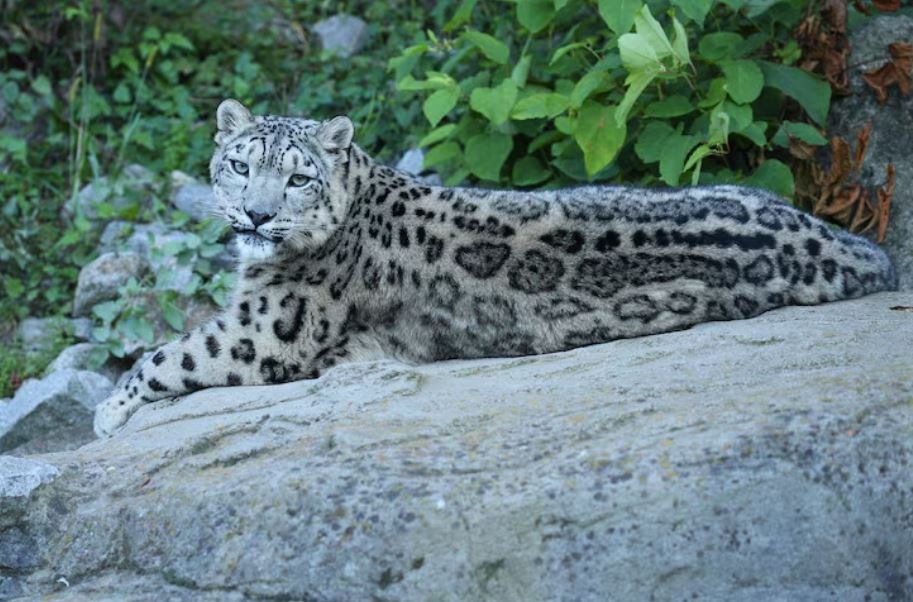
It’s worthwhile to sit with this history. Irina, Marwell’s final well-known snow leopard, passed away in August 2024 at the age of sixteen. She had raised four cubs of her own and had become a grandmother fifteen times over, according to the zoo. Staff recalled her as playful and independent, the kind of animal that seemed to enjoy stalking her own keepers for fun. It’s difficult to ignore the subtle continuity of this new chapter as it develops with Zaya. Different cats, different decades, but the same tireless efforts to preserve a species one cautious litter at a time.
Tucked away somewhere they won’t be able to move for a few more weeks, the cub or cubs are still small, blind, and totally dependent on their mother for the time being. Given the stakes, Marwell’s request for visitors to keep noise levels down close to the habitat seems reasonable. When the public may actually see them is not yet certain. According to the zoo, updates will be available on its website and social media platforms in the upcoming months, which is most likely the appropriate pace. Certain stories, particularly those that start in the dark, are better told slowly.
