

Every year around the end of May, a specific type of British denial takes hold. When the temperature rises above 25 degrees Celsius, people check the forecast, plan barbecues in secret, and don’t say much about it—as if speaking out loud about the warmth would frighten it away. That ritual seems almost charming this summer. June didn’t show up quietly. The final temperature was 37.7C.
Even prepared observers were shocked by what actually happened, even though the UK weather forecast had been tracking the June heatwave for days prior to its peak. Southern England saw temperatures rise to 38°C, with forecasts at one point indicating that some regions might reach 39°C, according to Reuters. A rare red warning for extreme heat was issued by the Met Office. Schools were closed. There were no trains. Additionally, the grass in the parks in central London changed from yellow to something more akin to straw.
Although May had already broken records with a temperature of 35.1C, June felt different despite being the second heatwave of the year. Nights provided little respite due to the combination of extended humidity and persistent daytime heat. In its June summary, the Met Office pointed out that exceptionally high nighttime temperatures were just as important as the daytime highs, which is when heat turns from being uncomfortable to actually dangerous. According to data released in mid-July, the May and June heatwaves together have since been connected to over 2,700 deaths in the UK.
Beyond the thermometer readings, the June event was noteworthy because of its larger context. June was the warmest June on record for Western Europe, with average temperatures more than 3 degrees Celsius above average.
The UK was not an isolated instance; rather, it was a part of a continental pattern caused by what meteorologists called a “heat dome” that settled over the area. The Atlantic systems that typically push through and disperse things are resisted by that type of setup, which holds warm air in place.
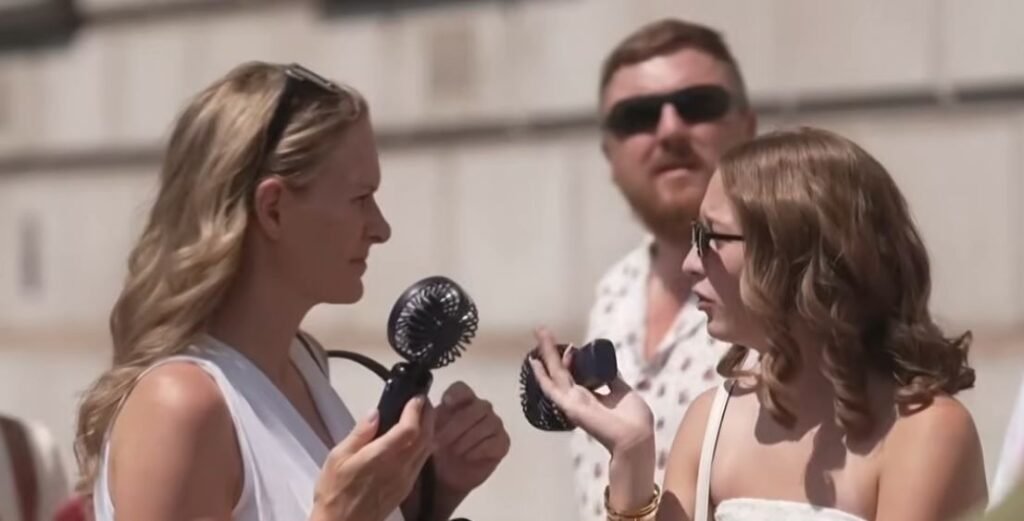
Parts of central England had been without significant rainfall for almost a month by the time July arrived. Wisley in Surrey recorded 31 days in a row without rain. The longest continuous dry spell in 30 years occurred in the southeast. The London Fire Brigade started alerting people to the possibility of wildfires in areas that had been green just a few weeks prior. Hosepipe prohibitions proliferate. Farmers described working through the night to prevent things from failing, as they already had to deal with crops ripening early and unevenly.
In July, there was a third heatwave that kept temperatures above 28C for two weeks in many areas of southern England. Bournemouth has already recorded 15 days in a row above its local heatwave threshold of 26C, and there is no indication that this run will end, according to the BBC’s weather service. By mid-July, there had been 28 days in the UK’s calendar year where temperatures had risen above 30 degrees Celsius, with seven of those occurring in May, eight in June, and thirteen in July. 34 such days is the all-time annual record, which was set back in 1995. It no longer appears to be a record.
Whether a fourth heatwave is imminent is a question that frequently comes up in discussions outside of bars, on weather forums, and in Met Office briefings. The truth is that it might. According to the Met Office’s longer-range forecast, late July will be more erratic, with occasional Atlantic systems passing through. However, the signal turns back toward warmer and drier conditions starting in the second week of August. Although forecasters are cautious to state that they cannot yet determine how intense or widespread additional heatwave conditions may be, there is a reasonable chance that they will develop.
The wider direction of travel is more difficult to ignore. In its most recent State of the UK Climate report, the Met Office observed that weather patterns that were previously regarded as extreme are becoming more commonplace. Since the 1980s, UK temperatures have been increasing by about 0.25C every ten years. It appears that the June heatwave of 2026 was not an anomaly. In a way, it was the summer that this nation had been anticipating for years.
