

The weather in Chicago has always been personal. It sometimes offers something so surprisingly pleasant that even longtime residents look up from their phones and pay attention, but it also arrives with an attitude and changes without warning. The city is currently experiencing one of those infrequent, pleasant periods in late July 2026, with low-to-mid-70s Fahrenheit temperatures, mostly sunny skies, and humidity that has been reduced just enough to make spending an afternoon outside seem like a sensible decision rather than a minor hassle.
A northeast wind kept the weather near the lake comfortable as Wednesday morning began with mostly cloudy conditions and a temperature of about 66°F. The clouds were predicted to dissipate by the afternoon, bringing the temperature closer to the mid-70s. A July day in Chicago that doesn’t try too hard has a subtly fulfilling quality. The National Weather Service’s beach hazard statement earlier this week, which was linked to increased wave action on Lake Michigan, served as a reminder that the lake sets its own rules even during the most pleasant times in the city.
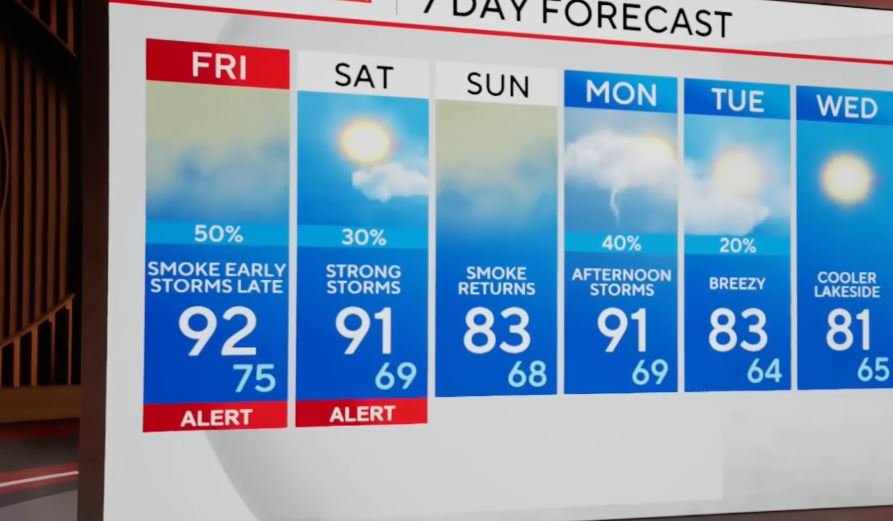
The ten-day picture conveys a slightly more nuanced narrative. With highs reaching the mid-to-upper 80s by Sunday and Monday, the weekend brings warmth back in a way that begins to feel humid once more. Additionally, the likelihood of taking a shower increases by 20 to 24 percent by the end of the weekend and into the following week.
Current models aren’t particularly striking, but they’re sufficient to carry an umbrella if you’re going to be outside on Sunday night. That kind of fluctuating pattern, with pleasant days interspersed with short, erratic periods, is typical of Chicago summers.
The sensory experience of the city during this type of weather is frequently overlooked in weather forecasts. By nine in the morning, the Chicago lakefront smells of sunscreen and wet sand on a clear late July morning. The outdoor seating at restaurants along Michigan Avenue quickly fills up, and Loop office workers loosen their collars as they enter buildings. People move differently when the humidity decreases, as it has this week. If you haven’t tried the alternative, which typically takes four months to arrive in Chicago, you might take its lightness for granted.
This week’s air quality has been exceptionally good. The current index is at excellent, following a period earlier in July when smoke from wildfires drifted in and pushed air quality readings into ranges that led to beach closures. For those who suffer from allergies, grass pollen levels are still high, which corresponds with typical late-July conditions in the Midwest. It’s the kind of thing that catches people off guard when they forget that a lovely summer day can coincide with a terrible allergy day.
The weather in Chicago, Illinois, usually draws two types of attention: those who are prepared for the worst and those who are delighted by the best. It’s the latter at the moment. The lake is acting as Lake Michigan does, acting as a natural air conditioner along the city’s eastern edge, and the storms that could arrive over the weekend appear to be more of an annoyance than an event for the time being. The forecast for this week is sunny and manageable. In a city where weather unpredictability has become a part of the civic identity, whether that is true is always up for debate. That identity is not incorrect. It’s merited.
