

What’s going on in Puget Sound is almost cruel. The water has the same appearance. The tides continue to come and go. However, a subtle and unnoticeable change has occurred in the chemistry, and the shellfish farmers who have worked these waters for generations are only now starting to realize how significant this change is.
Fundamentally, ocean acidification is fairly simple. The ocean absorbs about 25% of the carbon dioxide that is released into the atmosphere when fossil fuels are burned. This absorption sets off a chemical reaction that lowers the pH of the water and produces carbonic acid. Already, the ocean’s acidity has increased by roughly 30% since the industrial era. It’s not a forecast. That has already occurred.
The Pacific Northwest is particularly vulnerable due to a natural process known as upwelling. Coastal winds push surface water offshore in the spring and summer, bringing cold, carbon-rich water up from the deep. Because the deep water is already more acidic by nature, the chemistry becomes harsh when it reaches the surface, where shellfish are found. Puget Sound has some of the world’s most corrosive marine waters, according to NOAA researchers. That’s amazing for a place that, based on the idea that the water was good, developed a $270 million shellfish industry and 3,200 jobs.
Around 2007, the problem became evident. At commercial hatcheries, oyster larvae started to die at disastrous rates. At first, scientists and farmers suspected bacterial illness. It took months for anyone to realize that the water pumped into the hatchery tanks had become so corrosive that the larvae’s shells were dissolving before they had a chance to finish forming. In 2008, a strong upwelling event almost completely shut down the Whiskey Creek hatchery in Oregon’s Netarts Bay. For years, the regional industry was affected by the availability of seeds. Between 2008 and 2010, Goose Point, a shellfish farm on Washington’s Willapa Bay, saw a 40% decline in output.
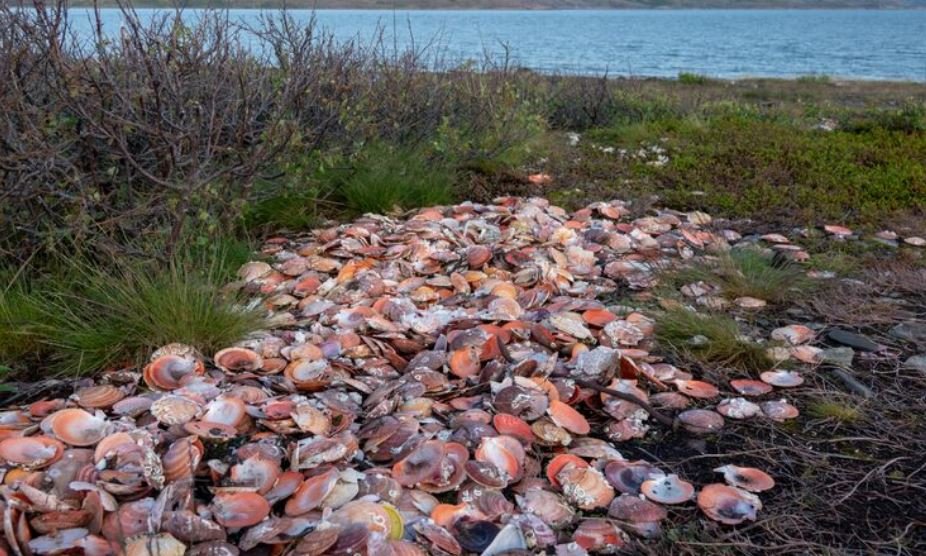
The particular type of calcium carbonate that oyster larvae use to construct their first shells is called aragonite, and this is the science behind it. Carbonate levels decrease as ocean acidity increases. The larvae are unable to deposit their shells quickly enough. NOAA scientists found that the effect was nearly binary in controlled experiments: larvae in corrosive water perished in two days. They performed well in water with a normal pH. There was no compromise.
It wasn’t a silent industry collapse. In order to install monitoring buoys that measure pH, temperature, salinity, and aragonite levels in real time, shellfish growers, researchers, state agencies, and tribal partners banded together. In order to lessen the acidity of incoming seawater during upwelling events, hatcheries learned to “buffer” it by adding chemicals like soda ash. That strategy was able to recover up to 75% of the losses in larvae production at certain operations. Goose Point and other farms went so far as to spawn Washington oysters at facilities in Hawaii, where the water chemistry is more tolerant. The juveniles were then shipped back to Washington to mature. It functions. Additionally, not all small producers can afford it.
The more difficult reality is that these modifications are basically time-buying. One of NOAA’s top ocean chemistry researchers, Richard Feely, has been monitoring these shifts since the 1980s, and his predictions are alarming. Within the next 30 to 40 years, corrosive water conditions along the Pacific Northwest coast may continue 50 to 60 percent of the time if emissions continue on their current trajectory. Hatchery tanks with buffering won’t grow to that size. The current generation of workarounds has a limited window of opportunity.
The larger food web is another thing to think about. Not just oysters are in danger. Under high CO2 conditions, dungeness crab, the most economically valuable fishery on the entire U.S. West Coast, has demonstrated damaged sensory organs and impaired shell development. Additionally, Pacific krill, a vital component that sustains salmon and other harvested fish, reacts poorly to acidification.
Scientists at the NOAA Northwest Fisheries Science Center in Seattle are attempting to accurately model the downstream effects of losing prey species at the base of the food chain. Most people seem to agree that the ecosystem that results from these changes will differ significantly from the current one and that it will be too late to take action until the changes in species abundance become apparent.
Compared to most states, Washington State has taken more aggressive action on this. A state action plan addressing emissions, local water quality, and long-term adaptation was created by a Blue Ribbon panel led by Governor Gregoire.
Data on ocean acidification is now included in the state Department of Ecology’s yearly Marine Waters report. Sensor networks have grown throughout the region’s universities. Nothing about this is insignificant. However, it’s also important to be truthful about the scope of the challenges those efforts face. The scientists and farmers who have spent the most time observing these waters seem to understand the limitations of local action on a global atmospheric issue.
As of right now, Taylor Shellfish employees continue to harvest about 50,000 oysters every night. Manhattan menus continue to feature oysters that are grown close to Olympia. The industry remains intact, has adjusted, and is keeping a careful eye on things. However, there is a sense of alertness in the way these farmers discuss the future—less assurance than calculation, less certainty than resolve. The water is still lovely. Simply put, the water is no longer exactly the same.
