

Bonga Southwest-Aparo appeared to be precisely the kind of project that would define Nigeria’s offshore future during the years when deepwater oil was still a relatively new technology and the Gulf of Guinea was being discussed as West Africa’s North Sea substitute. There is a reservoir. The resource is available. Shell has been aware of it for decades, and although the engineering hurdles are substantial, they are manageable when compared to other successful projects in the sector. The political and financial climate around the project was unmanageable for a very long period. As a result, billions of dollars’ worth of potential production remained on the seafloor while Bonga Southwest was studied, evaluated, scoped, and then postponed once more.
An $11.50 per barrel production-linked tax credit, approved by Nigerian President Bola Tinubu and intended to make deepwater projects like Bonga Southwest commercially feasible without the ad hoc negotiations that have traditionally defined Nigeria’s relationship with offshore investors, is the development that seems to have altered the calculation. This is a structural signal, not just a figure, for Shell and NNPC. Instead of terms that must be negotiated project by project and could fall apart if the political landscape changes, the loan makes the investment bankable on uniform terms. This seems to be just as important as the actual dollar amount.
The project’s numbers are significant enough to warrant careful consideration. Plateau production, which aims to produce 150,000 barrels of crude per day and 140 million standard cubic feet of gas per day, places Bonga Southwest in a tier that would significantly affect Nigeria’s overall output figures, which have been falling short of their potential for a number of years due to underinvestment and security concerns with onshore infrastructure. In an area where reducing gas flaring and supplying domestic energy are political concerns, the gas component is becoming more and more significant; the value of capturing rather than burning associated gas from a new deepwater production goes beyond the price of the commodity.
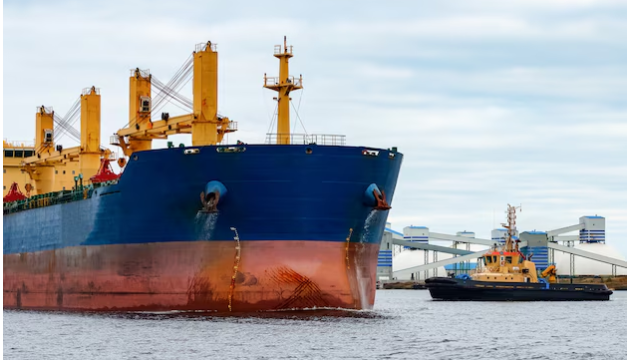
When determining if a project resurrection is real or still in the announcement stage, industry observers most closely monitor the ongoing FPSO procurement process. Among the most expensive and logistically challenging components of offshore infrastructure are floating production, storage, and offloading vessels; their design, acquisition, and deployment take years and need large upfront financial commitments from the operator and its contractors. The strongest indication that this revival has progressed above the paper stage is Bonga Southwest’s ongoing bidding and evaluation procedures for the FPSO vessel.
It’s important to recognize that Shell Nigeria’s strategic move away from onshore Niger Delta assets and toward deepwater is not limited to Bonga Southwest, but rather represents a larger trend in the company’s portfolio. Pipeline vandalism, bunkering operations, and the regulatory and community engagement problems that come with operating in heavily populated delta territory have been ongoing challenges for onshore activities in the Niger Delta. Despite its greater technical complexity and financial requirements, offshore operations are more predictable because deepwater assets are located far offshore in water depths that prevent them from being affected by the interruptions that have affected onshore infrastructure.
The Tinubu administration replaced the nearly absurdly drawn-out process of project-specific negotiations between foreign oil companies and the Nigerian government with a rules-based fiscal framework. Investors were aware of the resource’s existence. They were unable to foresee with any degree of certainty what terms they would obtain during a protracted negotiation process that could result in agreements that were subject to amendment when governments changed. When paired with the production-linked tax credit, the Petroleum Industry Act establishes a framework that is more stable and predictable, allowing investment decisions to be based on standard assumptions rather than the results of the current negotiation context.
