

The idea that robots are now constantly monitoring the ocean, a vast, light-starved, pressure-crushed place that most people will never see, is subtly unsettling. Not a single robot. There are hundreds of them. Moving in unison, communicating with one another through acoustic pulses, instantly changing their direction and depth, and producing more marine life data in a single mission than ten years of ship-based research could have. We may be witnessing the biggest change in ocean science since the development of sonar.
For many years, tracking marine migration patterns required laborious methods such as tagging individual animals, using acoustic buoys, and sending remotely operated vehicles down on long tethers that kept them attached to ships and their budgets. The data was slow, costly, and inconsistent. Before the battery died, a tagged tuna could transmit its location for several months. It was nearly impossible to continuously monitor plankton blooms, those enormous, ecologically significant events that support ocean food chains, over large areas. There’s a sense that science was constantly pursuing an unachievable goal.
That is beginning to change. Inspired by the very animals they study, such as fish schools, bird flocks, and insect colonies, researchers are now deploying swarms of tiny autonomous underwater vehicles, or AUVs, that interact with one another in a manner similar to that of natural organisms. The concept is clever in its borrowing: why can’t robots navigate changing currents as a group if a school of fish can do so without a central brain making all the decisions?
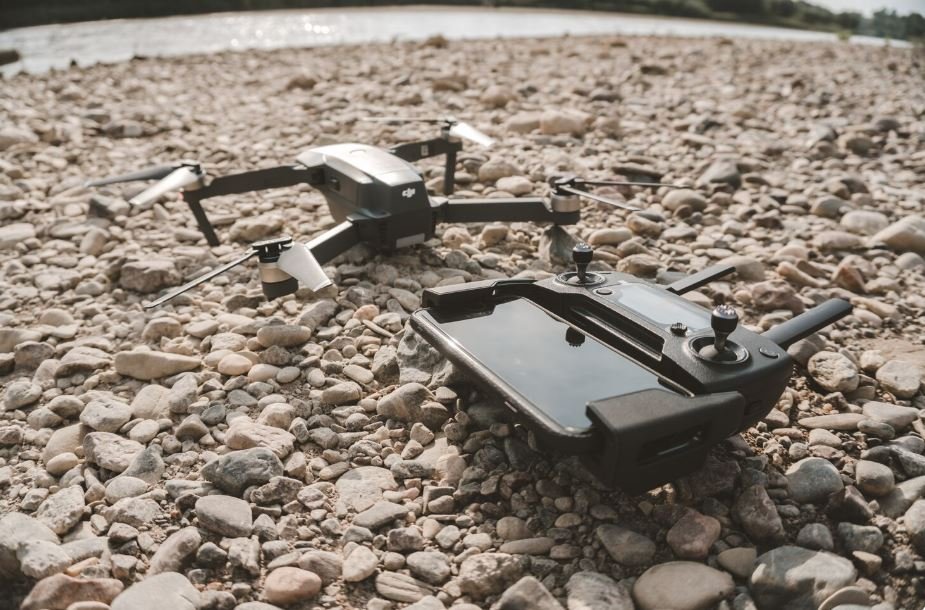
Swarms of tiny autonomous robots can change their buoyancy and move up and down in the water column in ways that were previously impossible to replicate with larger, single-vehicle systems, according to research from organizations like Scripps Institution of Oceanography. It doesn’t seem like engineering to watch this happen on screen, with dozens of tiny robots spreading out across a deep-water column and starting to reorganize as the water temperature changes. It appears to be biological.
It would be naive to ignore the significant engineering challenges. Underwater communication differs greatly from airborne communication. Within meters, radio signals vanish. Although acoustic transmission, which is essentially underwater sound, is effective over long distances, it is plagued by distortion, interference, and delay, which can make real-time coordination seem more like guesswork than networking.
Underwater drones equipped with electrochemical sensors that can detect environmental changes and simultaneously transmit data across acoustic networks that their swarm neighbors pick up and relay are being developed by Chinese research programs. These drones are designed to glide like manta rays. Although the ability of these systems to sustain dependable coordination at the scales required for open-ocean deployment is still unknown, the advancements over the past three years have been impressive.
The deep-water drone swarm idea is especially intriguing and, for marine biologists, genuinely thrilling because it has the ability to track not only the locations of animals but also the reasons behind their movements. Migration doesn’t happen at random. Thermal gradients are followed by whales. Tuna monitor the density of their prey.
Every day, zooplankton migrate vertically, driving nutrient cycles throughout entire ocean basins. You could find out where something was by using the old tools. With temperature sensors, chemical detectors, and real-time data processing heavily influenced by machine learning, the new swarms can start to piece together the environmental narrative surrounding a migration event as it occurs. A bloom emerges. Nutrients change. The fish show up. In order to create a picture that no single vehicle could ever put together, the swarm simultaneously records everything from dozens of locations.
This also has a conservation component that merits consideration. Conventional survey techniques are cumbersome and slow. In addition to making noise and causing turbulence, a research vessel chugging through delicate spawning grounds can change the behavior of the animals it is attempting to observe. A fundamentally less invasive method of collecting data is through small, silent, bio-inspired robots, some of which are based on the hydrodynamics of real fish and use flexible tail structures to reduce acoustic signatures. It’s not flawless. It’s never flawless. However, the difference between “what we can practically measure” and “what we need to know” is closing in ways that were unthinkable ten years ago.
Over 70% of the Earth’s surface is covered by the ocean, and the truth is that we still know remarkably little about what occurs in the majority of it. That is not immediately resolved by the deep-water drone swarms. Partially unresolved issues include battery limitations, communication bottlenecks, and the extreme mechanical hostility of continuous deep-sea operation. However, this technology is the first to scale to the size of the ocean, adapt to its complexity, and use the intelligence of the very life forms it is intended to study. That seems like more than just a technical detail. Perhaps this is the first step toward truly comprehending what’s down there.
