

Imagine a fifty-story-tall turbine anchored to the ocean floor by cables the thickness of a tiny vehicle, rather than on a concrete pile pushed into the ocean floor. In the swells, it sways a little. It is more expensive per megawatt than nearly everything that has been constructed by mankind to produce electricity. Additionally, the industry that is betting on it is currently working in secret to determine whether it will ever be sufficiently affordable to be significant.
In the energy transition, floating offshore wind is in a rather uncomfortable situation. The finest winds in the world blow over deep ocean, far from shore, where fixed-bottom turbines just cannot reach, and the physics are convincing. The economics don’t make sense. Not at all. A floating wind project’s levelized cost of energy, which is a common indicator of the total cost of electricity over a facility’s lifetime, is approximately $145 per megawatt-hour. Current fixed-bottom offshore wind farms are making between $75 and $95 per MWh. Utility-scale solar and onshore wind are much more affordable, frequently costing less than $50. Floating wind is more than just more expensive. It is almost three times more expensive than the most affordable options available online right now.
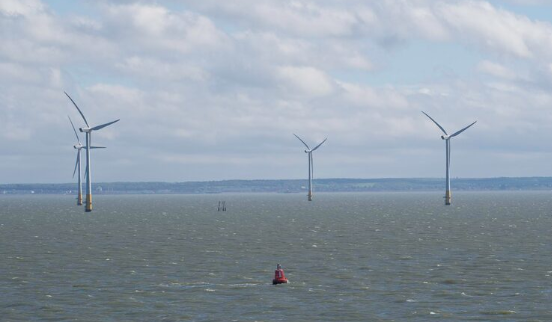
There is no mystery behind the causes of such disparity. It is costly yet simple to push the foundation of a fixed-bottom turbine into the comparatively shallow seafloor. Massive mooring chains, specialized installation vessels, semi-submersible platforms or spar-buoys, and ports capable of assembling and deploying these structures are all necessary for a floating turbine; most of these ports don’t currently exist and would take billions of dollars to create. Compared to traditional offshore installations, the requirements for steel and copper per megawatt are much higher. Additionally, once the turbine is operating, it is more expensive to maintain one in the deep ocean, far from shore, than one that can be reached by service boat from a nearby port.
Another level of difficulty is added by the funding layer. This is particularly clear from the UK’s Allocation Round 7 strike price data: floating wind projects have a cost of capital of 10.9 percent, whereas fixed-bottom projects have a cost of capital of 8.5 percent. This discrepancy exacerbates all subsequent cost calculations and represents what lenders and investors genuinely think about the danger of these projects. The estimated cost of Greenvolt’s 400 megawatt floating wind farm in the UK was £6,250 per kilowatt, which would have looked unreal in a sector that had spent years applauding declining offshore wind pricing.
The collision between those expenses and a larger offshore wind issue that has already shaken the fixed-bottom industry is what makes the current situation so acute. Approximately 4.4 gigawatts of U.S. offshore wind capacity were abandoned or suspended between 2025 and early 2026, and European developers who secured low-bid contracts prior to the 2021 inflation spike were left staring at projects that were simply unbankable at the prices they had promised to deliver. It begs the issue of what happens to floating wind, which hasn’t even reached commercial size, if fixed-bottom wind, a well-established, commercial-scale technology, is having such severe financial difficulties.
There is a plausible argument that floating wind will eventually stabilize. Prior to scale and competition driving down prices, the fixed-bottom cost curve had a similar trajectory. Norway’s Hywind Tampen has been generating electricity for an offshore oil platform since 2022, and Equinor’s Hywind projects off Scotland demonstrated the technology’s dependability. Ten years of deployment, standardized platforms, and specialized port infrastructure might significantly alter the economics. However, given the current state of the arithmetic, it’s difficult to ignore how much of the floating wind argument is based on hypothetical events rather than actual data.
