

Walking up to a typical bungalow tucked away among trees in the Essex countryside and realizing, in some way, that it goes down a very long way is subtly disorienting. No grand entrance. No imposing fence. With the exception of the brown tourist road signs that have been cheerfully pointing cars in the direction of the “Secret Nuclear Bunker” for decades, it’s just a small, unremarkable structure. The Top Gear crew, who once displayed those signs on air, were aware of the irony. No one who visits is unaware of it either.
The Kelvedon Hatch Secret Nuclear Bunker is located about an hour outside of London in the Essex Borough of Brentwood. Constructed during the RAF ROTOR air defense program in 1952 and 1953, the three-story building is 125 feet underground. At different stages of its existence, it was intended to function as the RAF Fighter Command’s Sector Operations Center and then as the Regional Government Headquarters, where hundreds of military and civilian personnel—possibly including a prime minister in office—would wait out a nuclear attack and attempt to plan what would happen next. The official literature uses the phrase “organise the survival of the population,” which has a bureaucratic flatness that somehow makes it more terrifying than any dramatic language could.
The air has a certain quality when you walk through the entrance tunnel, which is a 100-yard corridor before you even reach the lowest floor. Cool and a little stale, the kind of subterranean silence that feels more like suspension than tranquility. With its own water supply, air conditioning, generators, and a complex network of protected communications systems with names like MOULD and CONRAD, the bunker could support its intended occupants for up to three months. It is evident from reading those acronyms on a display panel how much work went into creating a world that most people were unable to fully comprehend.
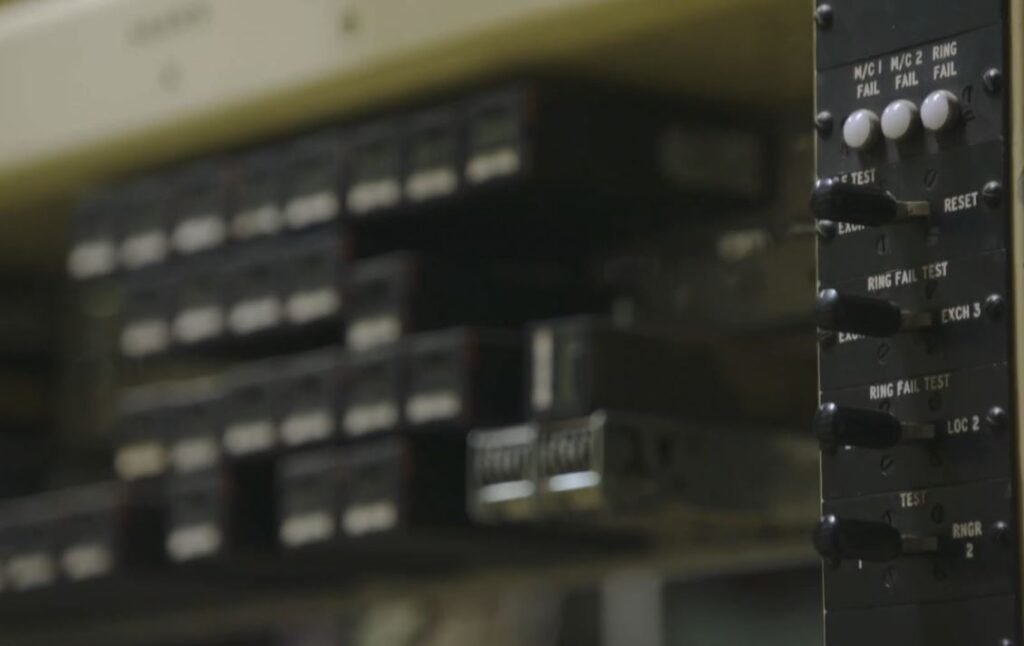
Using the personal audio devices that come with the £15 admission, the tour is self-guided. Along the way, there are movies to watch, rooms filled with original fixtures and fittings from different periods of the bunker’s working life, and a dressing-up area where guests can try on real military uniforms and gas masks. Visitors may spend five or six hours down there if they stop for everything, including the movies, the uniforms, and the lingering. Apparently, some people feel that a single visit is insufficient. That has an odd logic to it. The location builds up on you.
As the perceived nuclear threat subsided, the bunker was decommissioned in 1992. The Parrish family, a farming family from whom the government had forcibly acquired the land in the 1950s, later bought it back. It has a unique character because it is now privately owned and operated as a museum and attraction. It’s not a fancy, state-curated historical site. It’s more unique, a little rough around the edges, the kind of place where authenticity is more about the fact that the original equipment is still in the rooms where it has always been than it is about polish.
Reviews frequently focus on terms like “creepy,” “fascinating,” and “haunting.” One tourist who showed up early on a weekday morning talked about being the only person there and eventually giving up on a portion of the tour after seeing the medical area by themselves. More people seem to feel uneasy in the surgery section than in any of the government chambers or communications rooms. Maybe because it serves as the most tangible reminder of the bunker’s true purpose, which was to physically survive it in the dark rather than merely govern in extremis.
After spending an hour underground at Kelvedon Hatch, it’s difficult not to feel the weight of the Cold War differently. The teleprinter equipment, the cots, the canteen facilities, and the beige of the 1980s all suggest a world in which serious operational preparations were made for a nuclear aftermath. They installed communications cables, drilled boreholes, and constructed generators. They considered it. Depending on who you are, that may or may not feel reassuring.
The bunker has been featured in movies, a BBC drama episode, and the live-action video game The Bunker from 2016. The experience of standing in it yourself is something that none of that can truly prepare you for. There is a lot of ordinary green land in Essex. Beneath it, three floors of Cold War preparation sit mostly silent, waiting for guests who drive in, follow brown signs, and pay cash at the end because sometimes the WiFi doesn’t reach underground.
