

When they go to the beach, most people don’t give much thot to what lives in the sand. The water looks clean, the shore feels like home, and a jellyfish that washed up nearby is usually the biggest worry that can be seen. They are waiting just below the wet surface of the swash zone, which is the rough area where the waves break and pull back. There are often hundreds of these creatures waiting. They’re not as big as a rice grain. They will bite you if you don’t move for a long time.
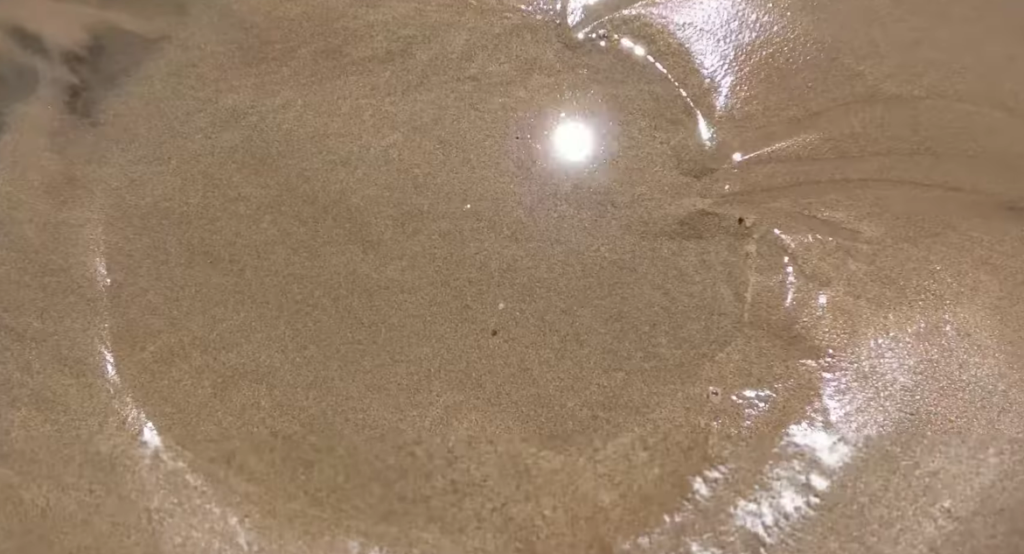
The scientific name for sand piranhas is Excirolana chiltoni. They are ocean-dwelling isopods that live buried in sandy areas between the high and low tides along the Pacific coast. On the east side, their range goes from the Pacific Northwest all the way down to Colombia. On the west side, it goes from Japan and Korea to South China. If you can see one, it looks like a small woodlouse—its body is divided into segments, it has many legs, and it has a tight, armored shape. It’s clear that the name “sand piranha” was borrowed for effect, but it’s not completely made up. These animals bunch up. They can smell protein. They also don’t mind taking samples of anything that is still in their territory.
People are interested in the name, but the biology is more interesting than the name suggests. Sand piranhas are scavengers that spend most of their time buried just below the water’s surface. They come to the surface to eat during high tide. Their favorite food is already dead, like fish bodies, kelp, and other organic matter that comes in with the tide. They have tiny hooks on their legs that help them grab food, and their mouths are made for scraping and chewing, not really hunting in the traditional sense. People can live in a single swarm of over a thousand. These animals quickly find dead things on Pacific beaches. They might have done a lot more damage to the shoreline if they hadn’t done that work.
People are naturally interested in the part where they bite people, even tho it’s not really what they do. Isopods may find chemical signals and gather around a person who stands still in wet sand or shallow water for a long time. They may see the warm, protein-emitting feet as a possible food source. People have said that the bite feels like a sharp pinprick or a papercut sting. It’s not unbearable, but it is noticeable, and it can draw small amounts of blood and leave tiny red marks. There is a useful hint hidden here: keep moving. These animals can tell when you are still. They don’t have time to gather when you walk thru shallow water.
Something a little unsettling and a little impressive about the whole thing is hard to miss. When that small of a creature works in swarms to clean up organic waste along thousands of miles of coastline, it feels almost industrial in its efficiency. As of now, the IUCN Red List has not evaluated E. chiltoni, which means that scientists do not know what the population status of this species is. Although they don’t seem to be in any real danger, it’s safe to say that they haven’t been studied as deeply as some marine animals. Also, most people don’t even know they exist.
The fact that these animals reproduce adds to how quietly complex they are. Oviviviparous means that the females carry eggs inside their bodies and then give birth to live babies. According to a study done in Japan, they breed from early April to late September. The babies, which are called manca, look like little adults except that they don’t have back legs yet; they will get those as they grow up. The animals that live in the few inches of sand between the ocean and the dry beach live full, structured lives that people barely notice. There’s something surprisingly complex about that.
“Sand piranha” is a catchy name that is likely to stick because it works. It’s not a good comparison, tho, the more you look at Excirolana chiltoni. Piranhas eat other animals. They are called tidiers. People’s feet are almost always nipped by accident, like a case of mistaken identity in the shallows. Most of the time, they’re just breaking down what the ocean has left behind. They do this by adding nutrients back to the sand and keeping things moving in the calm chemistry of a shoreline ecosystem. They’ve been doing it for a long time on beaches all over the Pacific without getting caught.
| Detail | Information |
|---|---|
| Topic | Ocean Dwelling Isopod Sand Piranhas |
| Scientific Name | Excirolana chiltoni |
| Common Name | Sand Piranha |
| Family | Cirolanidae |
| Size | Up to approximately 8 mm (roughly the size of a grain of rice) |
| Appearance | Segmented body, many legs; resembles a tiny woodlice |
| Habitat | Intertidal zones; buried in wet sand of the swash zone (where waves break) |
| Geographic Range | Pacific Ocean coastlines — Pacific Northwest to Colombia (east); Japan, Korea, South China (west) |
| Diet | Scavengers; feed on dead fish, kelp, seaweed, and other organic debris |
| Swarm Size | Can exceed 1,000 individuals |
| Activity Pattern | Most active during high tides; spend most time buried beneath sand |
| Bite Characteristics | Sharp pinprick/papercut sensation; can draw small amounts of blood; not dangerous to humans |
| How to Avoid Being Bitten | Keep moving; they only swarm when a person stands still long enough |
| Reproduction Type | Ovoviviparous (females incubate eggs internally, give birth to live young) |
| Breeding Season | Early April to late September (based on Japan study) |
| Newborn Name | Manca (missing rear walking legs at birth; develop with maturity) |
| Conservation Status | Not yet assessed by the IUCN Red List |
| Ecological Role | Natural cleanup crew; recycle nutrients back into the shoreline ecosystem |
| Article Word Count | ~660 words |
