

Every political narrative has a point at which the contradiction is too great to ignore. Beneath parliamentary procedure and procedural language, that moment arrived quietly in Westminster last week, but its ramifications are anything but. A Conservative amendment that would have allowed for new North Sea oil and gas drilling licences was rejected by the House of Commons by a vote of 323 to 108. The same government declared it would relax sanctions to permit the import of jet fuel and diesel made in Russia just hours after that vote. Even if you tried, you couldn’t create an optic that is more harmful.
The vote’s results provide a single narrative. Another is revealed by the geography. The response in Aberdeen, where the offshore oil industry not only shaped but virtually created the city’s economy in the early 1970s, has ranged from shock to rage. Two retired Aberdeenshire men talked about feeling “disgusted” at the Grill on Union Street, a pub that has witnessed both the city’s booms and its slower periods. One of them, a former accountant from the 1970s who worked for a major American oil company, recalled a different time period. The office has pool tables. A city that was electrifying. He questioned, “Where did all that money go?” “We’ve all just been forgotten.”
Sentiment may be a better indicator of what this vote truly means on the ground than any policy document. There used to be almost 500,000 North Sea-related jobs in Aberdeen. That figure is currently at about 84,000, and the sector is losing about 1,000 jobs each month. The anticipated green jobs that were meant to close the gap have taken a while to come to pass. Just 13 local jobs have been created by GB Energy since its much-publicized launch in Aberdeen last year. In contrast, it has 31 employees in London.
With characteristic conviction, Energy Secretary Ed Miliband told MPs that since the 2024 election, £90 billion in private investment had gone toward clean energy. He emphasized that existing fields would continue to function for the duration of their natural lives and that this was not about “turning off the taps.” However, Andrew Bowie, a Conservative MP for Kincardine and West Aberdeenshire, wasn’t having any of it. He brought up the fact that Norway is currently drilling from the same sea that Britain is currently passing legislation to prohibit. “This is insanity,” he declared. Observing the proceedings makes it difficult to completely write that off as partisan rhetoric.
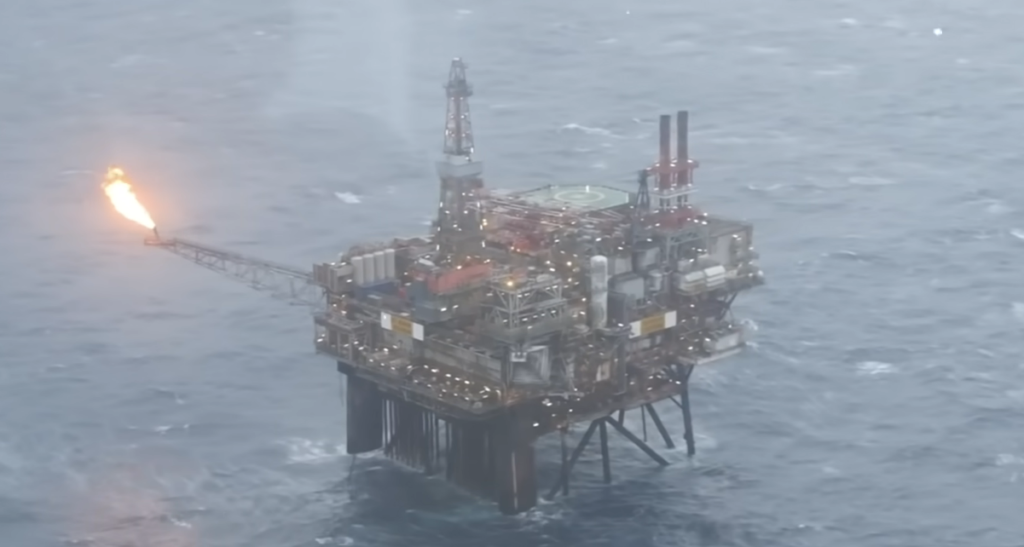
The story becomes really challenging to defend when it comes to the Russian oil angle. Citing growing costs associated with the Strait of Hormuz crisis, the government granted temporary licenses to import diesel and jet fuel refined from Russian crude. The timing of the announcement, which came on the same day Labour pressured its MPs to vote against new domestic drilling, was either a sign of how disjointed the government’s energy strategy truly is or it was catastrophically tone deaf. The Conservative MP for Gordon and Buchan, Harriet Cross, charged Starmer with “subsidising Moscow while decimating Aberdeen.”The Ukrainian government voiced apprehension. According to the EU’s economic commissioner, the action “came as a surprise.” By year’s end, the trade could increase Russia’s war chest by up to $1.4 billion, according to one defense think tank.
Beneath all of this, of course, is a geological reality. The Energy and Climate Intelligence Unit estimates that 93% of the oil and gas in the North Sea have already been extracted. Reaching what’s left is more difficult and costly. Production peaked in 1999 and has been steadily declining ever since, according to Chris Aylett of Chatham House. New licences wouldn’t necessarily result in lower British energy bills because private companies extracting the remaining reserves would probably sell on international markets rather than giving priority to domestic supply. Both sides find these facts to be inconvenient.
However, the North Sea Oil Drilling Vote was always going to be fought on an emotional level as much as an economic one, and Labour has put itself in danger on that front. Instead of supporting the Conservative amendment, the SNP’s seven MPs abstained; their candidate in the forthcoming Aberdeen South by-election is now attempting to take a cautious stance on this issue. Kemi Badenoch personally started the campaign in the city, and the Conservatives are treating the constituency as a referendum on energy policy. It remains to be seen if that tactic is successful. However, the question on every doorstep in a city that once relied on oil revenue is the same: why is Britain selecting foreign fuel instead of its own?
Sitting through all of this, there’s a sense that the vote was more of a pressure point in a longer dispute that Westminster hasn’t quite figured out how to have yet. No single parliamentary division will be able to separate the interconnected issues of energy security, climate commitments, economic justice for communities built on fossil fuels, and geopolitical dependencies. The tension was revealed by the drilling vote. The more difficult question is what comes next.
