

A certain type of ambition doesn’t make a big announcement. Instead, it manifests as four ships circling a section of the Norwegian Sea for almost 200 days, lowering 2,500-meter mooring lines into 1,300 meters of chilly, dark water, and declaring it a season’s work. That’s essentially what transpired at the Aasta Hansteen field, and it’s difficult not to see something bigger emerging as you watch it play out.
One of the most difficult areas of the Norwegian coast is where Aasta Hansteen is located. The field is farther from shore than most operators would find comfortable, the weather windows are unpredictable even in the summer, and the installation season is shorter than anywhere else along the shelf. The ocean floor is not a pleasant place to work. Everything is more expensive, takes longer, and requires a level of preparation that most project teams would find truly daunting.
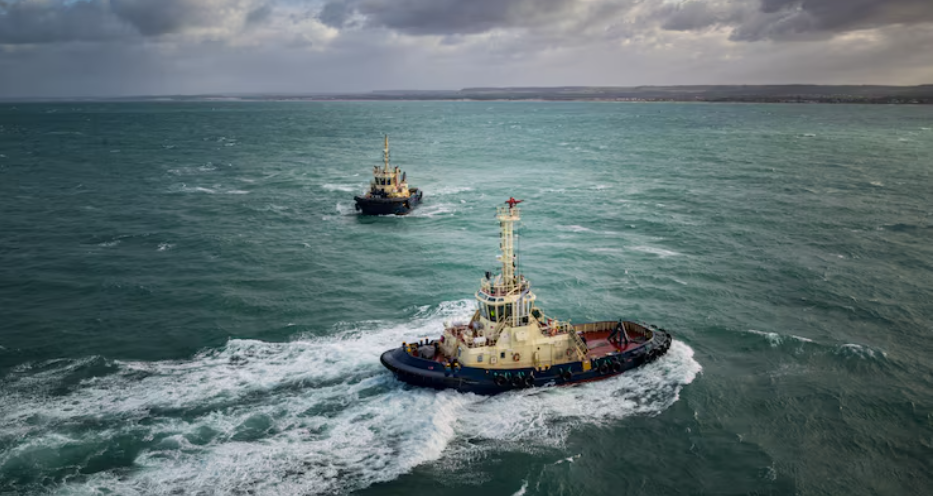
However, the campaign was successful. The Seven Oceans ship began mobilizing from Subsea 7’s base on the island of Vigra in late April, spooling risers and pipelines before deploying to the field. Pipelines, spoolers, risers, umbilicals, and hook-up work were all part of the meticulously planned operation that took place over several months and several vessels. Helge Hagen, the project manager, put it this way: SURF operations here are just more complex than anything in the North Sea. He wasn’t lying. The distance from base, the unpredictable Arctic weather, and the sheer weight of equipment built for 1,300-meter depths would all be significant obstacles on their own.
The team’s handling of weather delays was one particularly noteworthy decision. They divided the most delicate operations into smaller sub-operations rather than waiting for extended periods of stable weather. The outcome? The estimated 20-day weather wait time was reduced to just 10 days. That is not fortuitous. That’s a methodology, and it’s the kind of specificity that distinguishes truly sophisticated offshore operators from competent ones. The project teams at Equinor appear to have internalized a lesson that took years for the industry as a whole to learn: sometimes, flexibility in sequencing is more valuable than the best-engineered equipment.
Additionally, the use of BuBi pipes—liner pipes and steel catenary risers selected especially for corrosion protection at extreme depths—had a subtle significance. It was the first time Statoil, as the company was known at the time, had employed this strategy. Rigid risers become both technically possible and significantly less expensive than flexible alternatives at such depths. In ten years, this kind of materials innovation might seem commonplace, but at the time, it demonstrated a sincere desire to try new strategies under truly challenging circumstances.
The experience of Aasta Hansteen was not limited to Norway. Since then, Equinor has expanded its deep-water expertise into even more challenging settings. Around 200 kilometers offshore, the Raia project in Brazil’s Campos Basin pre-salt is situated in about 2,900 meters of water, which is more than twice as deep as Aasta Hansteen. In collaboration with Petrobras and Repsol Sinopec Brasil, the Valaris DS-17 drillship started drilling there in March as part of a six-well campaign. This continuity of experience is more important than it may seem because the same drillship had previously worked on the nearby Bacalhau field. At those depths, deep-water drilling rewards familiarity. Teams that have collaborated in the past, on equipment they are familiar with, and in situations they have encountered before make fewer expensive errors.
The offshore industry as a whole feels that the days of easy oil are long gone, and what’s left calls for precisely this kind of institutional patience—the readiness to invest in local supply chains, plan carefully, and view complexity as the task at hand rather than an obstacle. It’s still unclear if that strategy will continue to be profitable as energy markets change. But the template is in place for the time being. Additionally, a large portion of it was written at the Norwegian Sea’s bottom.
