

The summertime water temperature in the area between Point Conception and Point Arena off the coast of central California provides some insight into how well the wind has been working. The water close to the coast runs cold and dark green when it has—when powerful northerly winds have forced surface water offshore for weeks at a time. Phytoplankton is that color. Feeding on nutrients drawn up from depth by the upwelling process, billions of microscopic organisms bloom in concentrations dense enough to dye the water. The chlorophyll signal is so powerful that it appears from orbit as bright green streaks against the blue Pacific, giving satellite photographs of active upwelling zones an almost painted appearance.
That hue disappears when the wind changes or becomes weaker. The nutrient-rich, chilly water ceases to reach the surface. After using up all of the available nitrates and phosphates, the phytoplankton populations that had been expanding on the mineral supply cease to proliferate. The water clears and warms. It appears stunning. Ecologically speaking, it’s quieter than it ought to be.
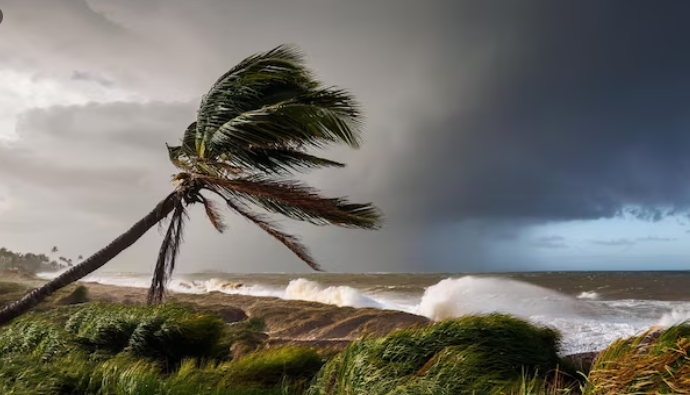
One of the processes that enables the most prolific fisheries in the world is coastal upwelling. This same fundamental process drives the eastern border currents, including the Benguela off southern Africa, the Humboldt Current off Peru and Chile, and the California Current along the U.S. West Coast. Deeper water rises to fill the void left by coastal winds pushing surface water offshore. Deep water contains concentrations of nutrients that have accumulated over decades or centuries of biological breakdown far below the sunlight zone. Even though it only covers a small region of the Pacific, the California Current system generates catches that sustain a sizable portion of commercial and recreational fisheries in the United States.
The physics of wind-driven circulation is solid and well-understood, so oceanographers are not worried that upwelling will completely cease. Timing, intensity, and variability are the issues. The atmospheric pressure gradients that propel coastal winds are changing due to climate change, and these changes are not consistent or straightforward. Warming is predicted to increase upwelling-favorable winds during specific seasons, according to some models and observations. In others, changes in the jet stream brought on by warming result in weaker, less reliable wind patterns that lessen the regularity and predictability of upwelling episodes. The picture is multifaceted and the management implications are actually challenging to plan around because both things can be true at the same time in different places or during different seasons.
What occurs when an upwelling weakens or occurs later in a year is more evident. On timescales of weeks to months, phytoplankton abundance affects the California anchovy and sardine populations that collapsed in the middle of the 20th century, which scientists and the fishing industry have been closely observing ever since. Fish that rely on the base of the food chain contract when the supply of nutrients declines. Cassin’s auklets, which nest on the Farallon Islands off San Francisco and primarily eat small crustaceans that rely on phytoplankton, are among the seabirds that schedule their breeding around the spring upwelling. In years when upwelling arrived late or weakly, these birds have had reproductive failures. During El Niño periods, which restricted upwelling and caused food fish populations to collapse over wide areas of their foraging range, California sea lions saw years of nearly complete pup mortality.
Upwelling systems have always experienced interannual variability due to El Niño and La Niña. These ecosystems have some inherent resilience to volatility because that is the natural context against which they originated. Beneath that variability, the new layer represents a longer-term directional shift in baseline conditions: warmer surface water that requires more cold, deep upwelling to displace, stratification that makes the cold-warm boundary more difficult to cross, and atmospheric patterns that are becoming less predictable in ways that don’t neatly align with historical seasonal expectations that the fishing industry, wildlife managers, and conservation planners have built their frameworks around.
The oceanographic data for the Monterey Bay region during the previous 20 years presents a conflicting image. In certain years, the system has been productive in ways that appear to be generally normal, and the upwelling has been strong and early. In other years, it has been erratic or delayed, cascading through the food chain by midsummer. The long-term dataset is what makes the trend apparent; no single year reveals much, but the measurements show a pattern of variability superimposed on a warming trend, and the researchers who have been gathering those measurements have been stating this for long enough that it is no longer a theoretical concern.
