

Observing a rescue crew toss grappling hooks at a humpback whale from a small inflatable boat—not to capture it, but to save it—has a surreal quality. What NOAA Fisheries‘ Large Whale Entanglement Response Network really does is captured in that image, which is subtly dramatic and rarely seen by the general public. These responders are not employed in offices or labs. They attempt to free animals that can weigh tens of thousands of pounds and suddenly panic while working in open water, frequently in choppy seas.
It is difficult to accept the scope of the issue. Every year, hundreds of thousands of marine mammals and sea turtles worldwide perish from entanglement in fishing gear. It is regarded as one of the main causes of human-caused mortality for large whales, particularly humpbacks, right whales, and gray whales. A whale is followed for weeks or months by fishing rope that is wrapped around its flippers, cutting through its flesh, causing infections, and gradually wearing it out as it drags the weight across hundreds of miles of ocean. It is a slow, brutal death that takes place mostly in the shadows.
The approach is what makes the response work truly unexpected. The method used by NOAA-approved teams to slow down a large entangled whale is called “kegging,” and it is directly taken from 19th-century whaling. Rescuers use hooks or grapples thrown from small boats to secure big buoys to the gear entangling the whale. The whale is slowed down by the drag those buoys create until teams can get close enough to evaluate the situation and try to cut the animal free. That history is almost unsettling—tools that were once used to kill whales are now used to save them. It’s possible that those working on this project are aware of irony.
Although the network was officially approved in the middle of the 1990s, the need for it has only increased since then. The Coast Guard, state and federal agencies, commercial fishermen, non-governmental organizations, and NOAA’s Office of Protected Resources collaborate to coordinate these responses nationwide. Time is always the pressure point when a large whale is spotted in distress, and the response frequently requires real-time coordination across multiple parties. When a whale cannot be released on the first try, satellite transmitters can be used to track it, giving teams another chance. However, not all animals receive one.
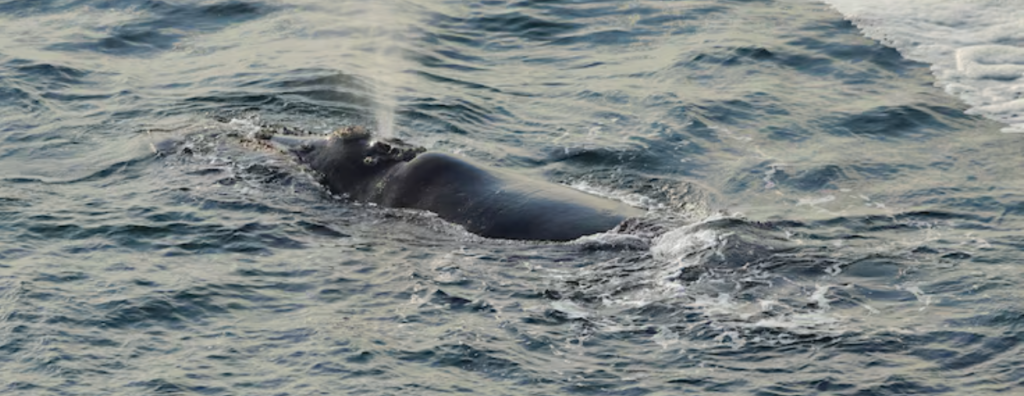
The strategy changes for smaller species, such as dolphins, seals, and sea turtles. Sometimes it is possible to catch animals in shallow water or on the beach, carefully restrain them, and remove their gear by hand. The same boat-based methods used for whales are also needed for larger leatherback sea turtles, which can grow up to six feet in length and weigh nearly a ton. Responders must complete extensive training before being permitted to attempt any of this, as each case is unique. The word “authorized” is purposefully highlighted. Untrained bystanders trying to assist could harm the animal or themselves, according to NOAA.
It’s difficult to ignore how much of this system relies on people just paying attention. The network’s capacity to react at all is fueled by reports from beachgoers, boaters, and fishermen. Sightings in real time are important. A whale found in gear on a Tuesday morning and reported right away has a significantly higher chance than one found three days later. Witnesses are only required by NOAA to maintain a 100-yard distance, record their observations, take note of their GPS coordinates, and call in. The teams that have been trained for it should handle the heavy lifting.
Every successful rescue contributes to something bigger. Ongoing research into gear modifications and management techniques intended to lessen entanglements before they occur is informed by data collected from each response, including the type of gear, the species, the location, and the severity. How quickly those changes can scale is still unknown. However, the teams continue to play.
