

At their Aircraft Operations Center in Lakeland, Florida, which has a subtle jet fuel and radar equipment odor, NOAA officials gathered on a warm Thursday morning in late May to deliver what most people perceived as comforting news. They stated that a below-average Atlantic hurricane season is anticipated in 2026. fewer storms. calmer seas. There is a 55% chance that this year won’t be too bad.
That’s for a reason. The term “below-average season” carries a sort of subtle deception, as anyone who follows hurricane science closely enough is aware. It explains quantity. About consequences, it says very little. According to NOAA’s own forecast, there will be 8 to 14 named storms and 3 to 6 hurricanes. These numbers may seem reasonable, but keep in mind that it only takes one storm to make landfall in the wrong location to turn a forgettable season into a disastrous one. The National Weather Service Director at NOAA, Ken Graham, put it simply: “It only takes one storm to make for a very bad season.” He has previously uttered variations of that statement. People keep forgetting it, which is why he keeps saying it.
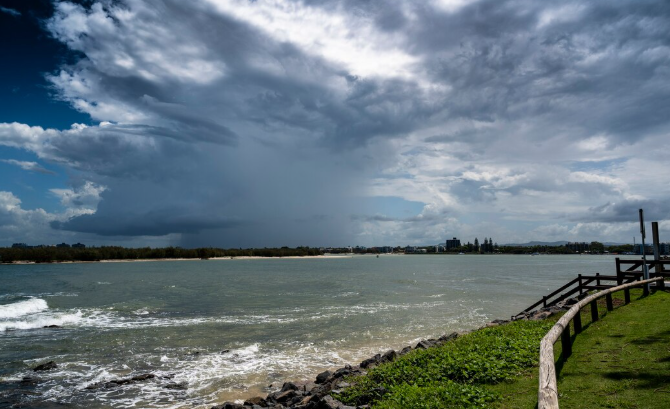
The conflicting factors influencing the outlook for this year are both genuinely intriguing and genuinely unresolved. El Niño, which historically tends to suppress Atlantic storm formation by increasing wind shear—basically disrupting the atmospheric conditions that allow hurricanes to organize and build—is predicted to develop and intensify throughout the season. The hopeful part is that. However, trade winds are predicted to be weaker than usual and Atlantic ocean temperatures are slightly higher than usual, both of which tend to encourage storm development. Forecasters are wagering that El Niño will prevail because these forces are essentially pulling in opposite directions. That wager might be correct. Another possibility is that everyone is taken aback by the season.
Here, the 2025 season is worth considering. There were just five Atlantic hurricanes, the fewest since 2015. On the continental United States, no hurricane made landfall. It appeared manageable based on the numbers. Nevertheless, four of those five storms attained Category 4 or 5 intensity, which is among the highest percentages of significant hurricanes in relation to all storms in recorded history. With winds of about 200 km/h, Hurricane Melissa tore through Jamaica at Category 5 strength, killing over 90 people in Jamaica, Haiti, and nearby islands. It also caused economic losses of over $12 billion, which is more than half of Jamaica’s total GDP. By any measure, it was a quiet season that left destruction on a scale that most people hadn’t anticipated.
It’s not a coincidence that there are fewer storms but more intense ones. The mean maximum intensification rates of Atlantic storms between 2001 and 2020 were about 29% higher than those between 1971 and 1990, according to research published in Scientific Reports. Storms are intensifying more quickly than in the past, going from controllable to catastrophic during windows that leave emergency managers with very little time to react. It’s difficult to ignore the fact that the old mental model—that more storms equate to greater danger—no longer holds true when observing this trend over the past 20 years.
To improve its forecasts, NOAA is incorporating next-generation satellite data, drone reconnaissance, and AI-based weather models. There is a real advancement in technology. However, improved forecasting doesn’t alter the fundamental physics of what a single, strategically placed Category 4 storm can do to an island economy, a port city, or a coastline without extensive insurance coverage. Recently, Allianz Commercial pointed out that companies frequently don’t realize they have coverage gaps until after a loss—a harsh form of education.
Meteorologists believe that when the word “below average” is spoken, people relax. The scientists themselves hold back their breath. They are already observing the warm water beneath the surface, waiting to see which force prevails in this year’s contest, and they are aware of what the Atlantic is capable of. They have seen it enough times to stop believing quiet forecasts.
