

What a small Spanish startup is doing on the periphery of Europe’s offshore energy frontier is subtly daring. While onshore wind farms and solar panels have dominated discussions about renewable energy, a company called Optimized Generators, or OptiGen as most industry insiders refer to them, has been focusing on an issue that major players have mostly avoided: how to construct a wind turbine that makes sense floating sixty meters below the ocean’s surface.
This question’s numbers are startling. In waters too deep for traditional fixed-bottom turbines, more than 80% of the world’s offshore wind potential is located. That’s an enormous amount of resource that has effectively been declared off-limits, not because the wind isn’t there—rather, it’s stronger and more reliable than nearshore—but rather because the engineering economics haven’t worked. It has often been extremely costly to get a turbine out there, maintain it, and bring it back when something breaks.
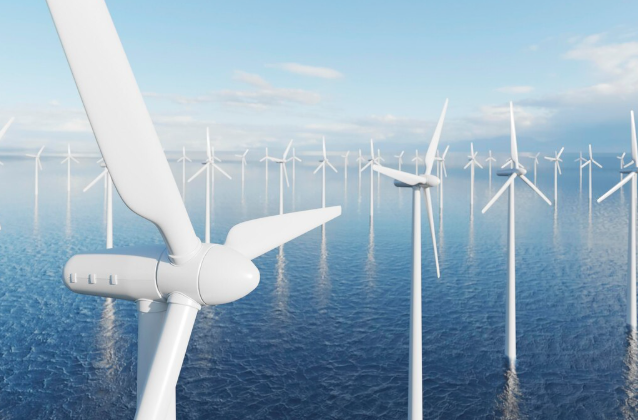
OptiGen’s solution is a 15 MW generator based on a patent-pending modular drivetrain that gets rid of the big bearing, one of the most enduring problems with offshore wind. Bearings break down. When they do, replacement costs are very high offshore, frequently necessitating long logistical chains and jack-up vessels. In place of them, the company installed a wheel-rail system close to the generator’s airgap. According to co-founder and CTO Santiago Canedo, this design reduces the need for structural stiffness around the generator while maintaining stability under all operating conditions. It’s a sophisticated workaround that begs the question of why it took so long.
The weight loss may be more immediately appealing. Nacelle weight is reduced by 35% thanks to the new design, which is crucial on a floating platform where top-heavy structures seriously impair stability. Floating turbines, massive devices perched on platforms in the open ocean and vulnerable to wind loads and waves that fixed structures never have to deal with, have always carried a sort of precarious logic. Technical advisor Stefan Keller appears genuinely excited about the maintenance implications: all components can be accessed and replaced in place without cranes, without towing the turbine back to port, and shaving weight from the top significantly alters that equation.
The last point merits more consideration than it typically receives. One of the dirty secrets of floating offshore wind economics is tow-backs, which involve dragging a broken turbine to harbor for repairs. They are costly, slow, and cause the turbine to stop producing for long stretches of time. Eliminating that requirement from the operational model is not only practical, but it could mean the difference between a farm that is profitable and one that secretly loses money.
The project is currently undergoing testing and is supported by the EU’s LIGHTWIND initiative. By the end of 2025, laboratory assessments of rolling contact fatigue are anticipated, and by the middle of 2026, full mechanical system tests on a smaller scale will follow. The design’s durability beyond the whiteboard will be determined by the outcomes of those tests. The wheel-rail system’s interaction with actual ocean conditions at full commercial scale is still unknown, but the company seems willing to accept that uncertainty.
OptiGen intends to advance the design toward ratings of 22 MW and eventually 30 MW by 2027. The trajectory is ambitious. It’s still unclear if the technology will be able to scale that quickly, secure the funding it requires, and withstand the regulatory complexity of large-scale offshore development. Observing initiatives like this, however, gives one the impression that deep ocean wind is at last transitioning from theoretical possibility to something more tangible, and that those involved aren’t waiting for approval.
