

Haean is a small basin in Yanggu county that is close to the border with North Korea. Lee Sang-hyuk has been farming there for forty years. He has seen droughts, late frosts, and a lot of rain. He didn’t see this. The fields he went into last week looked healthy—they were green, leafy, and plain on the outside. He then started to dig. It turned out to be potatoes that were already soft. Not gone bad from sickness. Not broken by bugs. The heat had cooked them in the ground, just like a pot of boiling water would. “It’s not just one or two fields like this,” he told a local news station. “I don’t even know how to say it.” I’m really upset.”
It is the hottest summer ever in South Korea, according to records. The city of Yangsan in the southeast of the country hit 42.5C on August 2. This was the country’s highest temperature since modern weather records began in 1904. The area as a whole has been very hot for weeks, and in farming areas, the soil has gotten so hot that root vegetables are almost cooked before they are picked. Gangwon province is in the northeastern mountains and is where Lee farms. In towns like Chuncheon and Hongcheon, severe heat warnings were sent out for the first time ever. It was too late for the crops that were already planted when the warnings came out.
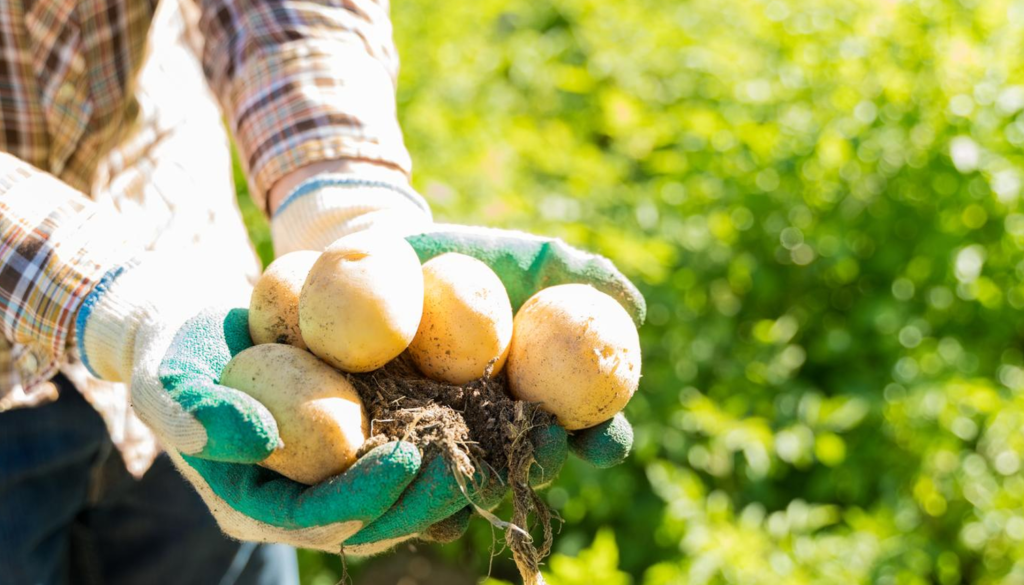
It’s not just potatoes that are hurt. In nearby fields, cabbages were burned so badly that farmers plowed them back into the ground instead of harvesting them. They had been waiting too long for market prices to get better, and the heat made them decide what to do. The lost cabbage alone cost thousands of won, which is tens of millions of won in lost income. It happened just a few weeks before Chuseok, a holiday in Korea where families buy a lot of food for big meals. Cheon Jeong-tae, an apple farmer, told SBS that his trees have stopped growing even tho the apples should be ready for the festival in September. The heat stress is making peaches split. Park Won-seon, a peach farmer, made the situation clear: “They tell us not to go out and work during the day, but these peaches keep going bad.” There’s no good choice. Don’t go outside and lose the crop. Take a chance on your health. The heat has taken away the middle ground.
The cost to people is also real. The heatwave is thot to have killed at least 31 people in South Korea and killed over 900,000 animals and 1.4 million farmed fish. Three lions died of heatstroke at a zoo in Tokyo, Japan, which is going thru its own rough patch. Japan’s weather agency, which seems to be short on words, created a brand-new weather category this year: “kokushobi,” which means “cruelly hot day” and refers to temperatures above 40C. In 2026, that name was used for the first time. Hong Kong had its warmest day since 1884, with a temperature of 36.9C. A weather station in Xinjiang, China, recorded 50C in July. What’s going on in the region is so big that it’s hard to take it all in at once.
Scientists have been calm but sure about what caused it. They said that the record high temperatures in Asia would be “virtually impossible” if it weren’t for global warming. Without it, this kind of heatwave would only happen about once every 10,000 years. The World Meteorological Organization says that Asia has been warming up about twice as fast in the last 35 years as it did in the 30 years before that. The acceleration can be seen in both the data and the fields now.
A study that was published in a 2024 agricultural science journal is worth mentioning. It found that South Korea’s summer potato crop will need heat-tolerant varieties in almost all future climates. Planting spring potatoes earlier might be a good idea. It was described by the researchers as a challenge for adapting to the future. Since the timeline for adaptation seems to be getting shorter faster than expected, framing might feel a little more hopeful right now. Gangwon farmers who dug up soft, falling apart potatoes weren’t ready for 2026 to be the year those predictions came true right away.
Food prices are going to go up even more before Thanksgiving. They are already pretty high as we head into the late summer. Officials say that damage assessments are still not complete because they haven’t figured out how much crop damage there was. The president of South Korea said that the situation was unlike anything the country had ever seen. He also called for a national crisis system overhaul, recognizing that these extremes may no longer be rare. Even tho it sounds quiet and formal, that acknowledgment means more than you might think. It seems to show that the working assumption has changed even at the government level.
| Detail | Information |
|---|---|
| Article Title | Record Heat Asia Potato Damage: Farmers Are Pulling Up Crops That Are Already Cooked |
| Topic | Record Heatwave in Asia — Agricultural Damage, 2026 |
| Key Affected Country | South Korea (also Japan, Hong Kong, China) |
| South Korea Peak Temperature | 42.5C in Yangsan on August 2, 2026 — highest since 1904 |
| Key Region for Potato Damage | Gangwon Province, Yanggu County (Haean basin) |
| Farmer Quoted | Lee Sang-hyuk — 40 years farming, first time seeing this damage |
| Potato Damage Description | Tubers coming up soft, collapsed, effectively cooked underground |
| Other Crops Affected | Cabbages (burned in field), apples (sunscald), peaches (splitting) |
| Human Deaths (South Korea) | At least 31 |
| Livestock Lost | Over 900,000 |
| Farmed Fish Lost | 1.4 million |
| Japan New Weather Category | “Kokushobi” (cruelly hot day) — introduced 2026 for temps above 40C |
| Japan Wildlife Loss | Three lions died of heatstroke at Tokyo zoo |
| Hong Kong Temperature | 36.9C — highest since 1884 |
| China (Xinjiang) Temperature | 50C recorded in July 2026 |
| Scientific Assessment | Heatwave of this magnitude “virtually impossible” without global warming |
| Without Climate Change Frequency | Once every 10,000 years |
| Asia Warming Rate | Roughly twice as fast over past 35 years vs. previous 3 decades (WMO) |
| Food Price Concern | Prices expected to rise further before Chuseok (autumn harvest festival) |
| Government Response | South Korean President called for national crisis system overhaul |
