

Seeing a coral reef die has a subtle, devastating quality. It doesn’t occur with a roar or a crash. Like something that was once vibrant being erased, the color gradually fades and turns white. The experience of floating above a bleached reef, which is still structurally sound and architecturally stunning but somehow emptied out, is described by scientists who have dedicated their careers to diving these reefs. hollowed out.
The fourth global coral bleaching event, which started in early 2023, is probably over as of mid-2025, according to NOAA, confirming what many in the marine science community had been anticipating. Following severe bleaching along Western Australia’s coast earlier this year, monitors saw a notable decrease in ocean heat stress, which prompted the announcement. It wasn’t until there were no reports of widespread bleaching during the austral summer of December 2025 to February 2026 that NOAA’s Coral Reef Watch felt secure enough to declare it over. It was telling that he hesitated. Derek Manzello of NOAA’s Coral Reef Watch observed that it is getting more difficult to define the boundaries of these events because the ocean is just staying too warm, too consistently, to give reefs much breathing room between disasters.
Until you sit with them, the staggering numbers behind this event are nearly numbing. Twenty-one percent of the world’s reefs suffered from dangerous heat stress during the first global bleaching event in 1998. That percentage increased to 37% by the second event in 2010. It reached 68% after the third event, which took place between 2014 and 2017. Reefs in the Pacific, Atlantic, and Indian oceans were impacted by this fourth one, which affected 84% of them and was reported in at least 83 nations and territories. Every subsequent incident has gotten worse. It’s not a subtle trend line.
The sheer magnitude of what coral reefs truly support makes this more difficult to comprehend. Reef ecosystems are essential to about one-third of all known marine species. In one way or another, one billion people depend on them for food, income, and coastal protection from erosion and storms. Globally, reefs are worth about $10 trillion. When you consider a fishing community in Palau, a dive tourism business in the Caribbean, or an Indonesian coastal village whose shoreline is protected by a reef that might not fully recover in a human lifetime, that figure seems abstract. Surangel Whipps Jr., the president of Palau, stated unequivocally that livelihoods, not just ecosystems, are at risk due to the fossil fuel era.
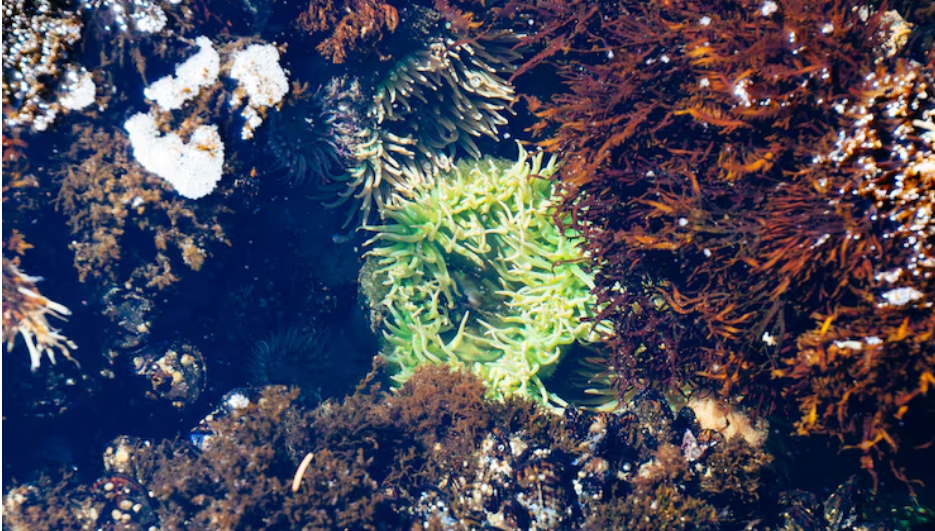
The precise reefs that will be able to recover and those that won’t are still unknown. Not all reefs bleached equally, according to researchers at the Global Coral Reef Monitoring Network; some reefs survived even when exposed to high temperatures. Now, scientists are attempting to figure out what shielded them. Genetics? conditions of the local water supply? Just good fortune? The answers are crucial because, in theory, resistant coral populations could help seed future reefs through targeted conservation and selective breeding. However, that optimism must be carefully weighed against the extent of the losses.
Concerns about the future are already being raised by NOAA. Ocean temperatures may rise again in the upcoming months due to an El Niño pattern, and Hawaii, Florida, and the Caribbean are at higher risk of bleaching. Every significant El Niño since 1998 has been accompanied by a worldwide bleaching event. Even though the fourth event has ended, the ocean hasn’t cooled to its previous level from 25 years ago. The starting line has, in a way, changed forever.
Observing all of this through data, satellite imagery, and the testimonies of divers coming out of the water gives one the impression that science is working heroically to record a loss that policy has been too slow to stop. Spending on coral conservation has been suggested to be increased sevenfold. The stated objective is still to keep warming to 1.5°C. The current forecast is 2.7°C. The reefs are already surviving—or perishing—inside that gap, and the math is unsettling.
