
Close Menu
Indeep ProjectIndeep Project
  • Home
  • Privacy Policy
  • Terms of Service
  • Disclaimer
  • About
  • Indeep
  • Marine Life
  • News
Indeep ProjectIndeep Project
SUBSCRIBE
  • Home
  • Privacy Policy
  • Terms of Service
  • Disclaimer
  • About
  • Indeep
  • Marine Life
  • News
Indeep ProjectIndeep Project
Home»Indeep»The Deep Sea Conservation Movement Is Running Out of Time
Indeep

The Deep Sea Conservation Movement Is Running Out of Time

Derrick LesterBy Derrick LesterApril 28, 2026No Comments4 Mins Read
Share
Facebook Twitter Reddit Telegram Pinterest Email

The way the deep ocean is being handled is subtly unnerving. When most people think of the sea, they envision beaches, waves, and possibly coral reefs in a vibrant tropical postcard. The cold, dark, nearly unfathomable area below, where mountains rise from the seafloor and corals older than the pyramids cling to rock, is the part that matters most, and they hardly ever imagine it. Few people are watching as that world is being scraped away.

Over the past few decades, scientists have been revealing more and more about what lives down there. Life-filled hydrothermal vents that don’t require sunlight. sponge fields with an almost extraterrestrial appearance. On seamounts, cold-water corals have been growing unchecked for 5,000 years. Researchers generally believe that we still know very little, despite the fact that every expedition seems to return with something new. A frontier this large, this ancient, and this delicate all at once is an odd thing.

InformationDetails
OrganizationDeep Sea Conservation Coalition (DSCC)
FoundedEarly 2000s, formalized around 2004
TypeInternational alliance of conservation groups
Member OrganizationsOver 100 international groups
Steering GroupConservation International, Greenpeace, Marine Conservation Institute, Natural Resources Defense Council, Oceana, Pew Charitable Trusts, Seas at Risk
MissionConservation of biodiversity on the high seas
Primary CampaignsMoratorium on deep-sea mining; ban on high-seas bottom trawling
Notable SupportersDr. Sylvia Earle, Dr. Callum Roberts, Sigourney Weaver, Dr. David Suzuki
Key Threat IdentifiedBottom trawling — called the “greatest current threat to seamount ecosystems” by the UN World Ocean Assessment (2021)
Notable Win2005 GFCM ban on bottom trawling below 1,000m in the Mediterranean
Coverage of ConcernSeamounts make up nearly 25% of the world’s seafloor

For twenty years, the Deep Sea Conservation Coalition—a coalition of over one hundred organizations—has worked to raise awareness of this problem. The Marine Conservation Institute, Greenpeace, Oceana, and Pew are all well-known. Callum Roberts, Sylvia Earle, Sigourney Weaver, and David Suzuki are among the voices. A moratorium on deep-sea mining and an end to high-seas bottom trawling are the two main things they have been advocating for. The first hasn’t really gotten underway. The second has been taking place for years in front of regulators.

The practice that most annoys people when they witness it is bottom trawling. The footage that scientists had been describing for years—heavy, weighted nets dragged across the seafloor, flattening everything in their path—was recently featured in Sir David Attenborough’s film Ocean. In a matter of minutes, seamounts that took millennia to form are reduced to rubble. It’s difficult to watch it without feeling that there is a serious problem with the way we harvest seafood. Economic inertia is the only real defense against it.
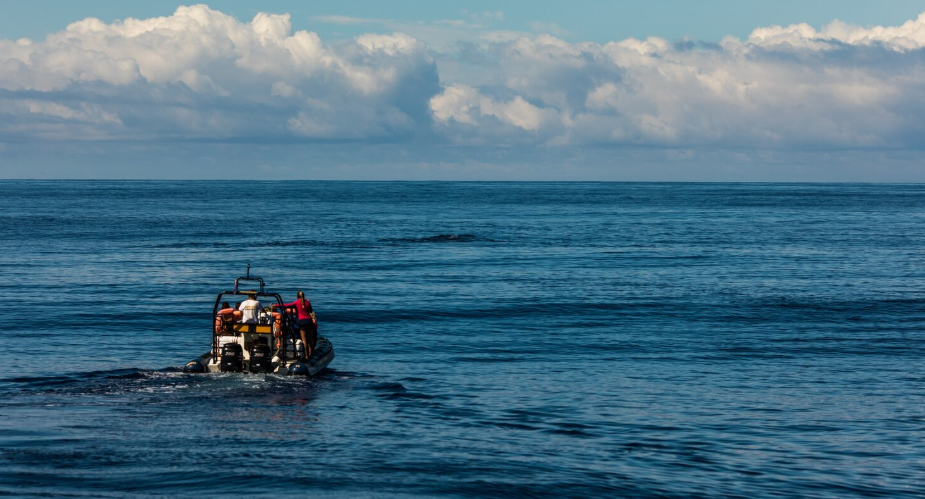
The Deep Sea Conservation

Seamounts should receive more attention than they currently receive. They make up about 25% of the world’s seafloor and serve as underwater oases, collecting life, nutrients, and currents in ways that nothing else in the open ocean can. They are close to whales. Turtles and sharks move through. Over thousands of years, cold-water sponges and corals accumulate. The ecosystem does not recover in a season or even a generation after a trawler scrapes one clean. It might not recover at all.

To be fair, there has been some political progress. More than a thousand scientists urged the UN to protect seamounts in a letter they signed in 2004. In response, the UN General Assembly passed resolutions, and a few regional organizations did the same. About 43% of Mediterranean seamounts were protected when the General Fisheries Council of the Mediterranean outlawed bottom trawling below 1,000 meters in 2005. The North Atlantic Fisheries Organization prohibited bottom fishing on its regulated seamounts in 2021. Both are true victories, but they are uneven, regional, and partial. Even as the science has grown more difficult to refute, a few countries continue to permit the practice on the high seas.

Observing this develop, one thing that sticks out is how slowly a problem this obvious has been addressed. It’s not abstract, the deep sea. Commercial fish breed there, carbon is stored there, and life on Earth may have originated there. Decades from now, we might look back on this moment in the same way that we now look back on the early days of deforestation—knowing what was being lost, yet somehow continuing. The scientists continue to write letters. The coalitions continue to form. And the nets continue to drag two miles below the surface.

Conservation Deep Sea
Share. Facebook Twitter Pinterest LinkedIn Telegram Reddit Email
Previous ArticleDeep-Sea Larval Dispersal: The Hidden Highway Beneath Our Oceans
Next Article ISA Stakeholder Consultation Process: Why Twenty-Three Submissions Mattered More Than You Think
Derrick Lester

    Derrick Lester is a professor and editor at indeep-project.org. His academic career has been molded by a single, enduring obsession: the sea and all life in it. Drawing from marine biology, oceanography, and the kind of hard-won field knowledge that only comes from spending significant time on and under the water, Derrick's writing has the depth of a scholar thanks to his years of research and teaching experience. His writing delves into the science of marine life with the inquisitiveness of someone who has never fully moved past the wonder of what exists beneath the surface. Derrick hopes to introduce readers to a world that encompasses over 70% of the planet and is, in many respects, still largely unexplored through his contributions to indeep-project.org.

    Related Posts

    China’s All-Weather Deep-Sea Megastructure Has the West on High Alert

    April 28, 2026

    China’s AI Deep-Sea Research Tools Are Now Outpacing What American Universities Can Build

    April 28, 2026

    The Mysterious Deep-Sea Habitats That Could Hold the Cure to Superbugs

    April 28, 2026

    The Skidaway Institute of Oceanography Is Doing Research That Could Reshape Coastal Policy Across the South

    April 27, 2026

    The Secret “Surveillance Cover” Behind Modern Deep-Sea Mining Operations

    April 27, 2026

    The Ocean Floor Is Becoming a Dumping Ground — and Almost No One Is Watching

    April 27, 2026
    Add A Comment
    Leave A Reply Cancel Reply

    You must be logged in to post a comment.

    Don't Miss

    China’s All-Weather Deep-Sea Megastructure Has the West on High Alert

    By Derrick LesterApril 28, 2026

    A six-story steel platform in the middle of disputed waters, with no nation permitted to…

    The Race for Cobalt: Why Mining the Abyss Is More Lucrative Than Space Exploration

    April 28, 2026

    How Physical Oceanography Seminars at the Leibniz Institute Are Influencing Research Agendas Across the Atlantic

    April 28, 2026

    China’s AI Deep-Sea Research Tools Are Now Outpacing What American Universities Can Build

    April 28, 2026

    Scientists Dropped a Camera 9,100 Meters Into the Ocean Off Japan. The Footage Left Them Speechless.

    April 28, 2026

    The Mysterious Deep-Sea Habitats That Could Hold the Cure to Superbugs

    April 28, 2026

    How One University of Rhode Island Professor Is Changing What We Know About Deep-Sea Organisms

    April 28, 2026
    About Us
    About Us

    Indeep-project.org is dedicated to disseminating information that is supported by data, open about its sources, and truthful about the limits of human knowledge.
    Peer-reviewed studies, official scientific publications, and the knowledge of contributors with firsthand knowledge of ecology, environmental policy, and marine science are all sources of information used by our editorial team. Content that expresses opinion is clearly marked as such, whether it comes from our own contributors or from outside sources.
    Important Information Opinion pieces, commentary, and third-party viewpoints on subjects like science, technology, finance, politics, and public policy are among the content published on indeep-project.org. Only educational and informational purposes are served by this content. It does not constitute expert scientific, financial, legal, or medical advice; rather, it reflects the opinions of the original authors.
    We strongly advise readers to seek qualified professional advice appropriate to their particular circumstances before acting on political, financial, or scientific information published on this platform. Decisions based on third-party opinion content published here are not endorsed, recommended, or liable for by indeep-project.org.

    Our Picks

    China’s AI Deep-Sea Research Tools Are Now Outpacing What American Universities Can Build

    April 28, 2026

    Scientists Dropped a Camera 9,100 Meters Into the Ocean Off Japan. The Footage Left Them Speechless.

    April 28, 2026

    The Mysterious Deep-Sea Habitats That Could Hold the Cure to Superbugs

    April 28, 2026

    How One University of Rhode Island Professor Is Changing What We Know About Deep-Sea Organisms

    April 28, 2026

    The Oceanographic Sensor That Just Outsmarted Decades of Manual Deep-Sea Data Collection

    April 28, 2026

    When the Ocean Boils: The Shocking Reality of Florida’s 100-Degree Coastal Waters

    April 28, 2026
    • Home
    • Privacy Policy
    • Terms of Service
    • Disclaimer
    • About
    • Indeep
    • Marine Life
    • News
    © 2026 ThemeSphere. Designed by ThemeSphere.

    Type above and press Enter to search. Press Esc to cancel.