
Close Menu
Indeep ProjectIndeep Project
  • Home
  • Privacy Policy
  • Terms of Service
  • Disclaimer
  • About
  • Indeep
  • Marine Life
  • News
Indeep ProjectIndeep Project
SUBSCRIBE
  • Home
  • Privacy Policy
  • Terms of Service
  • Disclaimer
  • About
  • Indeep
  • Marine Life
  • News
Indeep ProjectIndeep Project
Home»Climate Change»When the Ocean Boils: The Shocking Reality of Florida’s 100-Degree Coastal Waters
Climate Change

When the Ocean Boils: The Shocking Reality of Florida’s 100-Degree Coastal Waters

Derrick LesterBy Derrick LesterApril 28, 2026No Comments4 Mins Read
Share
Facebook Twitter Reddit Telegram Pinterest Email

Before any technical details or data, the first thing that divers mention is that it feels off. After the boat ride and the sun on your shoulders, you anticipate a momentary rush of coolness as you plunge into the water. It doesn’t appear. This summer, the water off the southern tip of Florida has been as warm as a bath and, in certain shallow areas, hotter than the hot tub at a roadside motel. Something about that is confusing. It’s not supposed to feel like indoor plumbing in the ocean.

Katey Lesneski has been witnessing it firsthand down on the reefs. She has been getting in the water as frequently as her schedule permits while working for NOAA at the Florida Keys National Marine Sanctuary. She claims that the reef itself is already in the low 90s. Manatee Bay, a shallow, partially enclosed area where the water has nowhere to go and the sun has all day to work on it, produced the 101-degree reading that made headlines. The corals are still going ghost white. Once that bleaching, almost fluorescent pallor sets in, time begins to run out.

DetailInformation
Location of recordManatee Bay, Florida Keys
Highest reading recorded101.1°F (Manatee Bay buoy)
Date of peak readingJuly 24, 2023
Surrounding buoy readings99.3°F at Murray Key; 98.4°F at Johnson Key
Average hot tub temperature100–102°F
Reef water temperature observedLow 90s°F across Florida Keys reef tract
Phenomenon triggeredMass coral bleaching event
Lead researcher citedKatey Lesneski, NOAA
Previous unofficial world record99.7°F, Kuwait Bay
Ocean warming trend since 1991Doubled the projected scale of marine heat waves per NOAA data
Forecast for September 2023Up to 50% of global oceans in heat wave conditions

In simple terms, bleaching is the process by which a stressed coral expels the algae from its tissue. In addition to providing the color, those algae serve as a source of food. A bleached coral is hungry, worn out, and waiting for its surroundings to improve, but it is not yet dead. Some of them come back when the water cools. If it doesn’t, they perish within a few days or weeks, and something else—typically a fuzz of opportunistic algae—moves onto the skeleton and remains there. The coral doesn’t regrow. That area of the reef has simply vanished.

This summer is peculiar because so many little things came together at once. The trade winds that typically push cooler water around and create the southeasterly sea breeze that residents plan their afternoons around were killed off when a stubborn high-pressure dome parked itself over Florida.
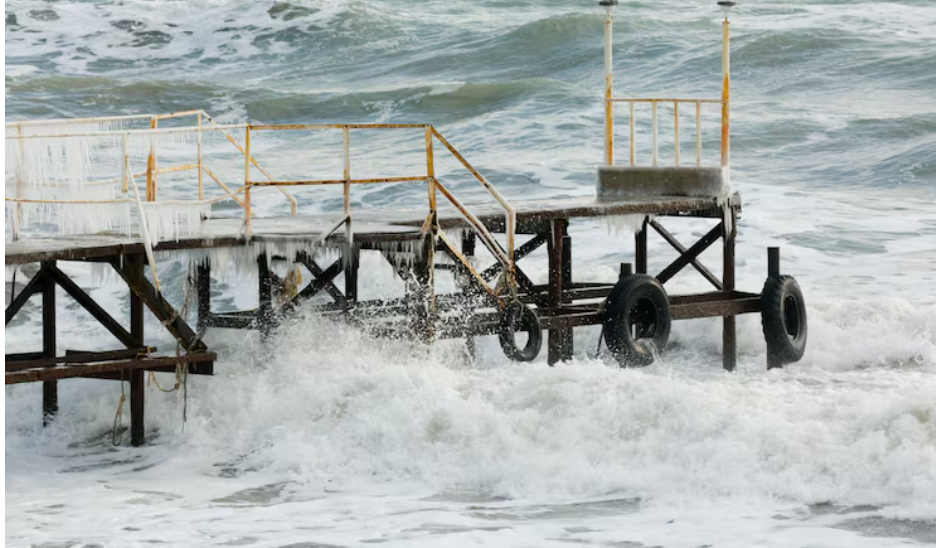
When the Ocean Boils

The temperature of the air reached the upper 90s. Like asphalt in a parking lot, the water absorbed sunlight, particularly in shallow, silty bays. Some scientists have drawn a helpful analogy: murky water is like asphalt, and clear water is like concrete. While one absorbs, the other reflects. The shallows along Florida’s coast have been absorbing a lot.

It’s difficult to ignore the fact that, if confirmed, the 101-degree reading would surpass a long-standing Kuwait Bay measurement as the highest sea surface temperature ever noted. That type of claim requires verification, and the silt and close proximity to land make matters more difficult. But even putting the record aside, what’s unsettling is the bigger picture. According to NOAA’s own analysis, the size of the marine heat wave predicted for this fall has nearly doubled due to ocean warming since 1991. Models indicated that perhaps 25% of the world’s oceans would experience heat wave conditions in September if that warming wasn’t factored in. The figure rises to half with it.

Speaking with those who have worked underwater for their entire careers gives me the impression that while this isn’t exactly the disaster everyone feared ten years ago, it’s also not far off. After a poor year, the corals can recover. They’ve already done it. Nobody really wants to respond aloud to the question of whether they can recover from a series of terrible years piled on top of one another in water that keeps getting warmer. Lesneski and her team are still working, counting, and hoping that the wind will change while they watch the reef bleach in real time. That’s all there is to do sometimes.

Boils Ocean
Share. Facebook Twitter Pinterest LinkedIn Telegram Reddit Email
Previous ArticleISA Stakeholder Consultation Process: Why Twenty-Three Submissions Mattered More Than You Think
Next Article The Oceanographic Sensor That Just Outsmarted Decades of Manual Deep-Sea Data Collection
Derrick Lester

    Derrick Lester is a professor and editor at indeep-project.org. His academic career has been molded by a single, enduring obsession: the sea and all life in it. Drawing from marine biology, oceanography, and the kind of hard-won field knowledge that only comes from spending significant time on and under the water, Derrick's writing has the depth of a scholar thanks to his years of research and teaching experience. His writing delves into the science of marine life with the inquisitiveness of someone who has never fully moved past the wonder of what exists beneath the surface. Derrick hopes to introduce readers to a world that encompasses over 70% of the planet and is, in many respects, still largely unexplored through his contributions to indeep-project.org.

    Related Posts

    Scientists Dropped a Camera 9,100 Meters Into the Ocean Off Japan. The Footage Left Them Speechless.

    April 28, 2026

    Deep-Sea Larval Dispersal: The Hidden Highway Beneath Our Oceans

    April 28, 2026

    The UN’s “Game-Changing” Ocean Treaty Is Here. Will the U.S. Actually Abide by It?

    April 27, 2026
    Add A Comment
    Leave A Reply Cancel Reply

    You must be logged in to post a comment.

    Don't Miss

    China’s All-Weather Deep-Sea Megastructure Has the West on High Alert

    By Derrick LesterApril 28, 2026

    A six-story steel platform in the middle of disputed waters, with no nation permitted to…

    The Race for Cobalt: Why Mining the Abyss Is More Lucrative Than Space Exploration

    April 28, 2026

    How Physical Oceanography Seminars at the Leibniz Institute Are Influencing Research Agendas Across the Atlantic

    April 28, 2026

    China’s AI Deep-Sea Research Tools Are Now Outpacing What American Universities Can Build

    April 28, 2026

    Scientists Dropped a Camera 9,100 Meters Into the Ocean Off Japan. The Footage Left Them Speechless.

    April 28, 2026

    The Mysterious Deep-Sea Habitats That Could Hold the Cure to Superbugs

    April 28, 2026

    How One University of Rhode Island Professor Is Changing What We Know About Deep-Sea Organisms

    April 28, 2026
    About Us
    About Us

    Indeep-project.org is dedicated to disseminating information that is supported by data, open about its sources, and truthful about the limits of human knowledge.
    Peer-reviewed studies, official scientific publications, and the knowledge of contributors with firsthand knowledge of ecology, environmental policy, and marine science are all sources of information used by our editorial team. Content that expresses opinion is clearly marked as such, whether it comes from our own contributors or from outside sources.
    Important Information Opinion pieces, commentary, and third-party viewpoints on subjects like science, technology, finance, politics, and public policy are among the content published on indeep-project.org. Only educational and informational purposes are served by this content. It does not constitute expert scientific, financial, legal, or medical advice; rather, it reflects the opinions of the original authors.
    We strongly advise readers to seek qualified professional advice appropriate to their particular circumstances before acting on political, financial, or scientific information published on this platform. Decisions based on third-party opinion content published here are not endorsed, recommended, or liable for by indeep-project.org.

    Our Picks

    China’s AI Deep-Sea Research Tools Are Now Outpacing What American Universities Can Build

    April 28, 2026

    Scientists Dropped a Camera 9,100 Meters Into the Ocean Off Japan. The Footage Left Them Speechless.

    April 28, 2026

    The Mysterious Deep-Sea Habitats That Could Hold the Cure to Superbugs

    April 28, 2026

    How One University of Rhode Island Professor Is Changing What We Know About Deep-Sea Organisms

    April 28, 2026

    The Oceanographic Sensor That Just Outsmarted Decades of Manual Deep-Sea Data Collection

    April 28, 2026

    When the Ocean Boils: The Shocking Reality of Florida’s 100-Degree Coastal Waters

    April 28, 2026
    • Home
    • Privacy Policy
    • Terms of Service
    • Disclaimer
    • About
    • Indeep
    • Marine Life
    • News
    © 2026 ThemeSphere. Designed by ThemeSphere.

    Type above and press Enter to search. Press Esc to cancel.