
Close Menu
Indeep ProjectIndeep Project
  • Home
  • Privacy Policy
  • Terms of Service
  • Disclaimer
  • About
  • Indeep
  • Marine Life
  • News
Indeep ProjectIndeep Project
SUBSCRIBE
  • Home
  • Privacy Policy
  • Terms of Service
  • Disclaimer
  • About
  • Indeep
  • Marine Life
  • News
Indeep ProjectIndeep Project
Home»Marine Life»China’s New AI Ocean Tool: Scientific Breakthrough or Covert Surveillance Mastermind?
Marine Life

China’s New AI Ocean Tool: Scientific Breakthrough or Covert Surveillance Mastermind?

Derrick LesterBy Derrick LesterMay 5, 2026No Comments4 Mins Read
Share
Facebook Twitter Reddit Telegram Pinterest Email

I was sitting in a café watching rain blur the windows when I first learned about China’s new ocean forecast system, and the timing seemed almost too perfect. The news hardly made an impression in the Western press when a nation declared that its experts could now anticipate the path of one of the planet’s most notoriously unpredictable currents seven months in advance. Perhaps the story was just too technical to make headlines. It’s also likely that no one was entirely sure how to interpret it.

For those who haven’t spent much time studying ocean charts, the Indonesian Throughflow is the warm-water highway that runs like a slow, salty river through the Indonesian archipelago, connecting the Pacific to the Indian Ocean.

Profile: China’s AI Ocean InitiativeDetails
Lead InstitutionsInstitute of Oceanology, Chinese Academy of Sciences & Nanjing University of Information Science & Technology
Headline SystemITF Inference and Prediction System
Forecasting RangeSeven months in advance
Companion ModelDePTH-GPT (Digital DEPTH project)
Affiliated BodySecond Institute of Oceanography, Ministry of Natural Resources
Research DomainIndonesian Throughflow, deep-sea seamounts, hydrothermal vents
Data SourcesSatellite records 1993–2021, sediment, bioacoustics, hydrodynamics
Published InFrontiers in Marine Science
Parallel Project“Supermind” platform, ITIC Shenzhen ($280 million state-funded)
Strategic GoalXi Jinping’s 2049 science and technology pre-eminence target

People don’t realize how important it is. El Niño cycles, fisheries, monsoons, and even the mood of far-off beaches are all subtly influenced by what this river chooses to do. The statement from the Institute of Oceanology and Nanjing University seemed truly significant because forecasting it has long been a tangle of skewed models and missing data. Their AI is said to replicate the current with remarkable accuracy after being educated on satellite sea-surface heights from almost thirty years.

Reading the formal report in Frontiers in Marine Science gives the impression that the researchers are a little taken aback by how effectively it functions. Deep learning does it by identifying patterns in data that people wouldn’t think to look for, then refusing to provide an explanation.
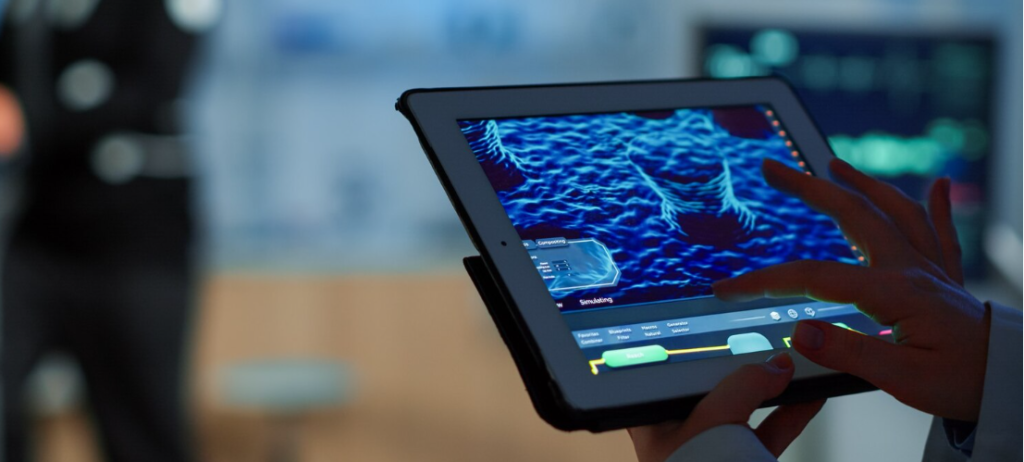
China’s New AI Ocean Tool

The deep-sea companion model, DePTH-GPT, was then introduced as part of the UN’s Decade of Ocean Science. It is more difficult to write this off as a specialized tool. It creates what its creators refer to as a “intelligent cognitive system” for hydrothermal vents and seamounts by ingesting video, topography, sediment chemistry, and the peculiar auditory fingerprints of species most of us will never witness. On a different day, this kind of project may inspire admiring profiles in National Geographic. But as you watch something develop, you can’t help but observe the larger context from which it is arising.

Because Newsweek was covering “Supermind,” a $280 million Shenzhen platform that scrapes Western academic databases, tracks 130 million researchers worldwide, and covertly creates dossiers on anyone Beijing might want to hire, replicate, or just keep an eye on, at the same time that these oceanographic systems were being unveiled. It’s an awkward juxtaposition. The ocean is mapped by one project, while the people who research it are mapped by another. The same family of algorithms powers both.

It’s difficult to avoid wondering where the line is now, if it exists at all. By most accounts, China’s scientists are producing meaningful and significant work. An actual contribution is the ITF model. DePTH-GPT may alter our perception of abyssal environments. However, over the past year, the same state apparatus that provides funding for these advancements has tightened access to its own databases, raided consultancies, and warned citizens to keep an eye out for foreign spies through comic books.

Perhaps the reality is more straightforward and unsettling than either story permits. Beijing sees no reason to compromise between the prestige of scientific leadership and the power of complete information awareness. After all, things have always been hiding in plain sight in the water.

China Ocean
Share. Facebook Twitter Pinterest LinkedIn Telegram Reddit Email
Previous ArticleInside China’s 30-Story Floating Island: The Dawn of a New Deep-Sea Arms Race
Next Article The North Atlantic’s Ventilation Change: How Three Decades of Warming Altered the Seas
Derrick Lester

    Derrick Lester is a professor and editor at indeep-project.org. His academic career has been molded by a single, enduring obsession: the sea and all life in it. Drawing from marine biology, oceanography, and the kind of hard-won field knowledge that only comes from spending significant time on and under the water, Derrick's writing has the depth of a scholar thanks to his years of research and teaching experience. His writing delves into the science of marine life with the inquisitiveness of someone who has never fully moved past the wonder of what exists beneath the surface. Derrick hopes to introduce readers to a world that encompasses over 70% of the planet and is, in many respects, still largely unexplored through his contributions to indeep-project.org.

    Related Posts

    The North Atlantic’s Ventilation Change: How Three Decades of Warming Altered the Seas

    May 5, 2026

    Inside China’s 30-Story Floating Island: The Dawn of a New Deep-Sea Arms Race

    May 5, 2026

    China Just Published Maps Detailing Billions in Minerals on the Ocean Floor

    May 5, 2026

    How Physical Oceanography Seminars at the Leibniz Institute Are Influencing Research Agendas Across the Atlantic

    April 28, 2026

    How One University of Rhode Island Professor Is Changing What We Know About Deep-Sea Organisms

    April 28, 2026

    The Oceanographic Sensor That Just Outsmarted Decades of Manual Deep-Sea Data Collection

    April 28, 2026
    Add A Comment
    Leave A Reply Cancel Reply

    You must be logged in to post a comment.

    Don't Miss

    The Golden Orb Mystery That Stumped Deep-Sea Researchers for Years Has Finally Been Solved

    By Derrick LesterMay 5, 2026

    When something unexpected shows up on the screen, a certain type of stillness descends upon…

    Scientists Are Discovering That Deep-Sea Ecosystems Are Far More Interconnected Than Any Model Predicted

    May 5, 2026

    How Climate Mitigation Scenarios Might Actually Hurt Emergent Deep-Ocean Patterns

    May 5, 2026

    The North Atlantic’s Ventilation Change: How Three Decades of Warming Altered the Seas

    May 5, 2026

    China’s New AI Ocean Tool: Scientific Breakthrough or Covert Surveillance Mastermind?

    May 5, 2026

    Inside China’s 30-Story Floating Island: The Dawn of a New Deep-Sea Arms Race

    May 5, 2026

    The University of Delaware Student Who Dove Deeper Than Most Humans Have Ever Gone — and What She Found

    May 5, 2026
    About Us
    About Us

    Indeep-project.org is dedicated to disseminating information that is supported by data, open about its sources, and truthful about the limits of human knowledge.
    Peer-reviewed studies, official scientific publications, and the knowledge of contributors with firsthand knowledge of ecology, environmental policy, and marine science are all sources of information used by our editorial team. Content that expresses opinion is clearly marked as such, whether it comes from our own contributors or from outside sources.
    Important Information Opinion pieces, commentary, and third-party viewpoints on subjects like science, technology, finance, politics, and public policy are among the content published on indeep-project.org. Only educational and informational purposes are served by this content. It does not constitute expert scientific, financial, legal, or medical advice; rather, it reflects the opinions of the original authors.
    We strongly advise readers to seek qualified professional advice appropriate to their particular circumstances before acting on political, financial, or scientific information published on this platform. Decisions based on third-party opinion content published here are not endorsed, recommended, or liable for by indeep-project.org.

    Our Picks

    The North Atlantic’s Ventilation Change: How Three Decades of Warming Altered the Seas

    May 5, 2026

    China’s New AI Ocean Tool: Scientific Breakthrough or Covert Surveillance Mastermind?

    May 5, 2026

    Inside China’s 30-Story Floating Island: The Dawn of a New Deep-Sea Arms Race

    May 5, 2026

    The University of Delaware Student Who Dove Deeper Than Most Humans Have Ever Gone — and What She Found

    May 5, 2026

    UK and Portugal Are Quietly Building the Most Ambitious Deep-Sea Research Partnership in the North Atlantic

    May 5, 2026

    Inside the Mission to Chart Atlantic Deep-Sea Life Before Deep-Sea Mining Destroys It

    May 5, 2026
    • Home
    • Privacy Policy
    • Terms of Service
    • Disclaimer
    • About
    • Indeep
    • Marine Life
    • News
    © 2026 ThemeSphere. Designed by ThemeSphere.

    Type above and press Enter to search. Press Esc to cancel.