

When test results are inaccurate, a certain kind of silence occurs in the laboratory. Not incorrect in the sense of a mistake, but incorrect in the sense of something that doesn’t align with what anyone has been taught. When Boston University researchers extracted their samples from more than three kilometers below the Pacific Ocean’s surface and passed them through human immune cells, that seems to be precisely what happened. Nothing took place. There was no response from the cells. And that turns out to be the most concerning outcome imaginable.
The expedition was conducted in the Phoenix Islands Protected Area, which is located in the isolated waters of Kiribati and is the world’s largest and deepest UNESCO World Heritage Site. It’s not exactly a place you happen upon. The actual work takes place aboard what is essentially a floating laboratory, where scientists sequence genes at odd hours and look into samples that no human has probably ever looked at.
| Discovery Profile | Values |
|---|---|
| Event | Deep-sea microbial expedition in the Phoenix Islands Protected Area |
| Location | Central Pacific Ocean — Phoenix Islands, Kiribati |
| Depth Explored | Over 3,000 meters below the ocean surface |
| Lead Institution | Boston University — Rotjan Marine Ecology Lab |
| Collaborating Bodies | Harvard Medical School, Boston Children’s Hospital, Government of Kiribati |
| Key Researcher | Randi Rotjan, Research Assistant Professor of Biology, BU |
| Co-Lead Authors | Anna Gauthier, Jonathan Kagan |
| Published In | Science Immunology — March 12, 2021 |
| Duration of Research | Five years, spanning 2,000 nautical miles of Pacific Ocean |
| Marine Area | Largest and deepest UNESCO World Heritage Site in the world |
| Core Finding | Novel bacteria discovered that trigger zero response from the human innate immune system |
| Previous Assumption | Universal immunity — the belief that human immune cells can detect any bacteria |
The journey there takes weeks at sea. Together with a closely knit interdisciplinary team, Randi Rotjan, a marine biologist at BU and co-chief scientist of the Phoenix Islands Protected Area, spearheaded the endeavor. Five years of labor. thousands of genes. The open ocean is about 2,000 nautical miles. From a distance, it’s easy to underestimate its sheer logistical weight.
What they discovered, or rather, what their immune cells were unable to detect, were bacteria that were so alien to human biology that they were completely ignored by the innate immune system. Rotjan referred to them as immunosilent. The word seems almost poetic until you consider its true meaning. The rapid-response system, which has been operating for hundreds of millions of years and is the human body’s oldest defense mechanism, just didn’t sound an alarm. No response. No acknowledgment. Nothing.
This is significant because the scientific consensus, which is found in all basic biology textbooks, maintained that the innate immune system functions on a basis that is nearly universally acknowledged. Immune cells were supposed to be able to identify the molecular signatures of any bacteria they came into contact with, no matter where they came from. It’s the kind of fundamental assumption that most researchers have probably never considered challenging. Why would you do that? It had consistently held.
Even after all these years, it’s possible that the deeper implications are still being considered. The boundaries of what we believe we understand about infection, immunity, and biological recognition may be softer than the textbooks suggest if bacteria that evolved in total isolation—defined solely by their local deep-sea environment, untouched by any contact with human biology—can exist outside the immune system’s awareness. There’s a feeling that rather than breaking a rule, this discovery showed that the rule was always an educated guess disguised as certainty.
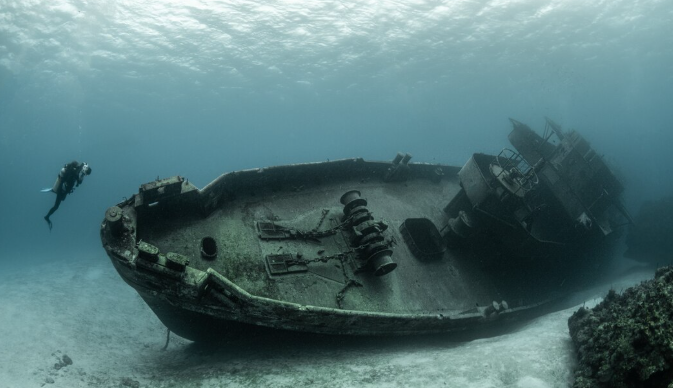
It’s difficult not to be moved by the discovery’s extreme remoteness as you watch this kind of science develop. This was not a coincidental observation or a lab mishap. It resulted from years of meticulous, uncomfortable fieldwork in one of the world’s most remote marine environments—researchers lowering equipment into a darkness that most people will never see while leaning over a research vessel’s railing in the central Pacific. The ocean is good at keeping secrets. Apparently, the trip was worthwhile for this one.
It is genuinely unclear whether the medical ramifications will eventually lead to new immunology research avenues. However, the discovery itself—that life exists in the deep sea that is so evolutionarily dissimilar from everything on Earth that our immune systems are unable to recognize it—is the kind of discovery that subtly changes your perspective on biology. The textbooks are still lagging behind. Seldom do they.
