

A Pacific Ocean that won’t cool down has a subtle unnerving quality. In the central-eastern equatorial Pacific, subsurface temperatures have been more than six degrees Celsius above average. This figure may sound technical, but it actually means that heat is building beneath the surface like pressure behind a dam, eventually forcing its way upward and altering weather patterns across entire continents. As we approach what looks to be a challenging winter season, that is precisely what is taking place at the moment.
According to the World Meteorological Organization, there is an 80% chance that El Niño conditions will continue through June and August of 2026, and there is a 90% or greater chance that the pattern will continue through at least November. Additionally, the majority of forecast models do not classify this as a weak event. The working assumption is moderate to strong, and history indicates that this is very important. The most recent major El Niño, which peaked in 2023–2024, was one of the five strongest ever recorded and directly contributed to the year’s record global temperatures. The forecasting community can still clearly recall it.
Though no two El Niño events are the same, it’s possible that this winter will follow a similar script. The WMO has taken care to point out that every event has a unique fingerprint, including timing, regional peculiarities, and interactions with secondary climate drivers such as the Southern Annular Mode and the Indian Ocean Dipole. The models do agree on the general direction of travel, which is warmer almost everywhere, wetter in some areas, and dangerously dry in others.
El Niño winters usually bring more rainfall to parts of southern South America and the southern United States. Central Asia and the Horn of Africa frequently exhibit similar trends. In contrast, drought risks are increasing dramatically in Australia, Indonesia, Central America, the Caribbean, and portions of southern Asia. The upcoming months are crucial for the farming communities in these areas, who already have to contend with narrow profit margins due to erratic seasons. not a risk that is abstract. actual ones.
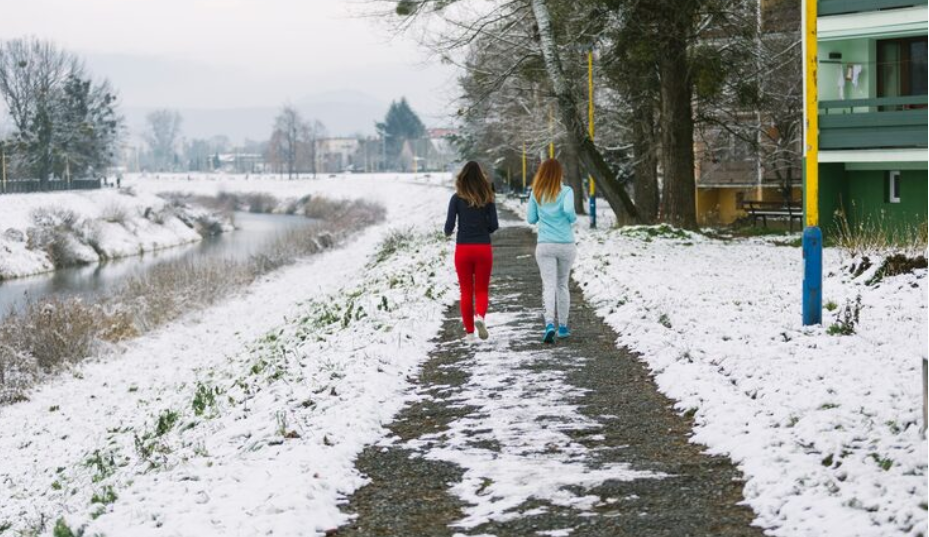
As this progresses, there’s a sense that the world’s readiness is still stubbornly uneven. In his assessment, UN Secretary-General António Guterres was straightforward, stating that El Niño is expected to arrive “with 90% certainty” and cautioning that its effects will “hit harder, travel farther, and cross borders.” Strong language coming from a body that typically uses measured language. The worry was echoed by WMO Secretary-General Celeste Saulo, who distinguished between early warning systems and real lives saved. There are such systems. Whether they get to those in greatest need before things worsen is the question.
The uneven distribution of discomfort is one of the strangest aspects of El Niño winters. For example, the Atlantic hurricane season usually slows down because warm Pacific waters interfere with the atmospheric conditions necessary for Atlantic storms to form. This year, NOAA is predicting a below-normal Atlantic hurricane season. The opposite is true in the Pacific. Hurricane activity tends to increase in the eastern and central Pacific. Florida has good news. Not particularly comforting for communities in Hawaii or along the Pacific coast of Mexico.
In terms of their basic oceanic mechanics, El Niño events don’t seem to become more frequent or intense due to climate change. However, once they get there, it does alter their meaning. The extremes that El Niño already tends to produce are amplified by a warmer baseline atmosphere, which also carries more moisture and releases more energy. Heatwaves burn more intensely. More water is dumped in less time during rainfall events. The fundamental engine is organic. It now operates on something different.
The full expression of the winter of 2026/2027 is still months away. As new ocean data becomes available, forecasters will continue to modify their models. However, the general outline is sufficiently clear to take action, and any emergency manager will tell you that this window is precisely when preparation is most beneficial.
