

There is a certain type of carelessness that appears with the best of intentions. When marine ecologist Andrew Thaler boarded the MV NorSky off the coast of Papua New Guinea in 2008, he sincerely thought that deep-sea mining could be done ethically and that the seafloor could release its metals without losing its soul. He wasn’t innocent. He was a meticulous scientist working with Nautilus Minerals, a mining company, to determine whether extraction at Solwara I, a hydrothermal vent field, could continue with the least amount of environmental damage. His perspective was drastically altered by what he saw on the seafloor through the cameras of a remotely controlled vehicle plunging into the darkness.
In one of the most geologically active regions on Earth, he witnessed life—dense, remarkable, irreplaceable life—clinging to the walls of mineral-rich chimneys. Lobster squats. groups of organisms that use chemical energy instead of sunlight to survive. ecosystems that are unique to this planet. By the time the expedition was over, Thaler had come to the conclusion that hydrothermal vent mining had nowhere to go. Not in the ocean, not at Solwara I.
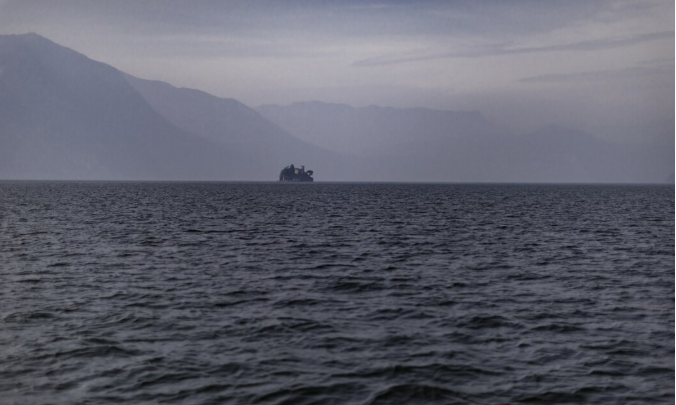
The weight of that story, which has now been published as an analysis on Mongabay, feels distinct from the typical conservation arguments. This is not a campaign by an NGO. It’s a researcher who went into the process with good intentions and emerged with an uncomfortable, unambiguous conclusion.
Hydrothermal vents are peculiar and unique locations. Metals such as copper, zinc, gold, silver, and rare earth elements are deposited as tall chimney structures known as seafloor massive sulfides when seawater is drawn down into crustal fissures, superheated under extreme pressure, and then erupts back through the seafloor. These sites are biologically remarkable because of the same geological process that makes them commercially appealing. The island of Manhattan is larger than the combined area of all known hydrothermal vent fields. It’s difficult to ignore that fact for a little while.
A recent global ocean governance report supports Mongabay’s broader coverage, which portrays deep-sea mining as a “growing potential threat” to ocean biodiversity. However, the economic landscape is also changing in unexpected ways. Recent reports indicate that as metal prices fluctuate and the logistical costs of operating miles below the surface remain stubbornly high, the economic case for deep-sea mining is waning. For more than ten years, the industry has been promising a revolution in the supply of minerals. The revolution continues to be delayed.
WWF and OceanCare are no longer the only organizations advocating for a complete worldwide moratorium on deep-sea mining. Businesses such as BMW, Volvo Group, and even Google have made a commitment to avoid sourcing minerals from the seafloor. This is an impressive statement to make publicly during a time of intense anxiety over the battery supply chain. It’s really unclear if that commitment will hold true as EV production increases. Pledges made by corporations to be sustainable are susceptible to commercial pressure.
Reading all of this gives me the impression that the discussion is truly at a turning point. It is becoming more difficult to maintain the claim that deep-sea mining is a greener option than land-based extraction. Although the harm that terrestrial mining causes to society and the environment is real, it does not automatically excuse the destruction of a biosphere that has hardly been mapped by science. About half of the oxygen on Earth is produced in the deep ocean. Its roles in carbon cycling are not well understood. It feels less like progress to disturb it on a large scale before comprehending it, and more like a risk with long-term repercussions.
For the simple reason that it is uncomfortable, Thaler’s account is worth reading. He searched for an explanation but was unsuccessful. Such candor is more uncommon than manganese nodules on the seafloor in a discussion this entangled with economic interests and climate urgency.
