

Shrimp from Thailand, salmon from Norway, and tilapia from Vietnam can all be found in nearly every grocery store in coastal New England. They are all priced to move and neatly packaged under fluorescent lighting. This has long been the unspoken reality of American seafood consumption: a nation encircled by the ocean imports more than $24 billion worth of seafood each year, with about half of it coming from farms abroad. When you think about it, it’s an odd situation. Apparently, NOAA has given it some thought.
The Cooperative Institute Fostering Aquaculture Research and Markets, or CIFARM, is a five-year project supported by $13.5 million in initial funding that the agency announced earlier this month. The lead institution will be the University of New Hampshire, which will lead a nationwide network from the University of Hawaii to New Hampshire Sea Grant. This type of announcement is often overlooked in favor of louder news cycles.
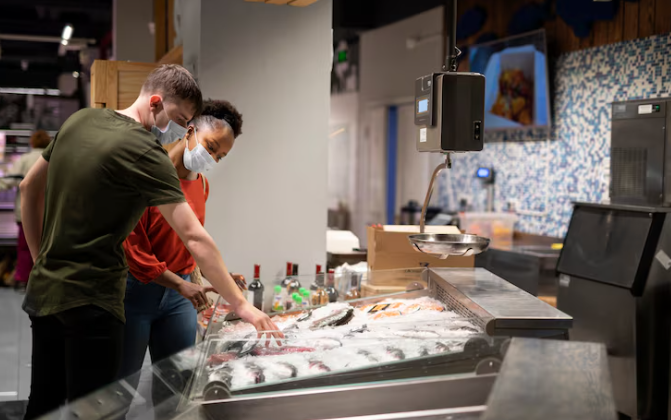
The scope is truly ambitious. CIFARM researchers will work on everything from artificial intelligence applications in fish farming operations to offshore aquaculture demonstration farms. They will research ocean conditions, examine seafood markets, and attempt to understand why domestic seafood production is still so challenging and costly in comparison to what other nations are able to accomplish. There’s a feeling that the people behind this initiative want to move product, create jobs, and change the source of American seafood rather than just conducting another academic exercise.
The United States has the infrastructure to lead in responsible aquaculture production, according to David Fredriksson, director of UNH’s Center for Sustainable Seafood Systems. It may be lacking in coordination. Here, UNH adds a great deal of credibility. The university currently operates AquaFort, an offshore aquaculture research platform where steelhead trout are raised in an integrated system with sugar kelp and mussels to minimize nutrient waste. The model is not theoretical. It’s in the water already.
Nevertheless, it’s important to have some skepticism in addition to optimism. Prior announcements of federal aquaculture programs did not significantly alter the domestic seafood industry. It has historically been challenging to scale even promising research into something commercially significant due to regulations, coastal zoning disputes, and consumer ignorance of American-farmed fish. The real question that no one has yet been able to answer is whether CIFARM can close the gap between laboratory innovation and the real seafood counter.
This time, the political alignment does feel different. The initiative fits neatly within a 2020 executive order and a 2025 Trump administration order focused on restoring American seafood competitiveness. Congress mandated the establishment of this institute through FY2024 appropriations. Although it doesn’t ensure success, that kind of bipartisan momentum at least implies that the funds won’t vanish into thin air after the first year.
It’s difficult to ignore the larger change taking place here, which is a growing national unease with food supply vulnerabilities that was impossible to ignore during the pandemic years. Coastal communities from Mississippi to California know exactly what’s at stake, even though aquaculture isn’t the most glamorous policy lever. access to protein that is not solely dependent on international shipping lanes, jobs, and waterfront economies.
It remains to be seen if a Durham, New Hampshire-based cooperative institute can actually make a difference across the country. However, the funding is dedicated, the research partners are sincere, and the infrastructure is genuine. At the very least, it’s worthwhile to watch.
