

The Sentinel-6 Michael Freilich satellite is currently over the Pacific Ocean at an altitude of about 1,336 kilometers and traveling at a speed of about 7.2 kilometers per second. It is doing what has been done continuously since 1992: bouncing a microwave pulse off the ocean’s surface, timing how long it takes to return, and using that measurement to track how high the sea is sitting in relation to a reference ellipsoid that scientists have agreed represents, as accurately as possible, what a perfectly spherical Earth would look like at mean sea level.
On any given day, the figure the satellite is calculating is not particularly noteworthy. It varies by millimetre fractions. The ocean has risen more than 11 centimeters since 1993, and it is rising more quickly than it was when the observations began, according to the record those figures have accumulated over more than 30 years, which is one of the clearest datasets in climate research.
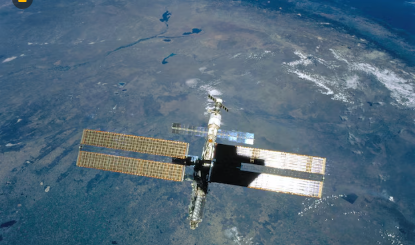
In comparison to the overall number, the acceleration is the aspect of the satellite measurements tale that receives insufficient attention. The sea level was rising at a pace of about 2.1 millimeters per year in 1993. nearly the past three decades, the rate has more than doubled to nearly 4.5 millimeters annually. Until you consider the implications for the trajectory over the next thirty years, that doesn’t sound dramatic.
By the middle of the century, coastal areas may see an additional 16 to 17 centimeters of sea level rise on top of the 11 cm that have already been documented, given the current rate and the acceleration that is anticipated to continue. Flood risks that did not exist at this scale a generation ago are already being managed by cities like Miami, Jakarta, Mumbai, and Amsterdam. The most accurate assessment of the factors causing those dangers is being provided by the satellite data.
Understanding the measurement technology is important because it provides an explanation for why satellite data is more reliable for world averages than earlier tide gauge records. Sending microwave pulses downward from a satellite in a perfectly determined orbit, timing the round journey to the ocean’s surface, and calculating height from those data is how radar altimetry operates. At global scales, the accuracy is now better than a centimeter thanks to decades of improvement and cross-checking against tidal gauges and other sensors.
Separately, the GRACE and GRACE-FO gravity missions, which identify minute changes in Earth’s gravitational field brought on by shifting mass distributions, enable scientists to distinguish between the amount of sea level rise resulting from actual water added to the ocean (melting ice sheets and glaciers) and the amount resulting from the ocean merely expanding as it warms. At present, the breakdown is around 67% from melt and 33% from thermal expansion; however, the melt percentage is increasing due to the accelerated mass loss of ice sheets in Greenland and Antarctica.
The record’s continuity is what gives it scientific credibility and makes the acceleration apparent. In 1992, TOPEX/Poseidon was introduced. Through three generations of instruments, the measurement was advanced by the Jason series. Now in operation, Sentinel-6 carries it out with increased precision.
For calibration, each mission overlaps with its predecessor, resulting in an uninterrupted chain of data from the early 1990s to the present. The SWOT satellite, which was launched in late 2022, expands the system’s usefulness into the regions where residents are most immediately affected by sea level rise by adding the ability to measure not only open-ocean sea level but also water levels in lakes, rivers, and coastal areas.
There’s something that functions differently from the typical interaction between scientific measurement and public understanding when you watch this data increase year after year. The techniques are recorded and cross-checked, the figures are precise, and the record is lengthy. The 11-centimeter elevation is a direct measurement rather than an estimate or a model result.
The current data shows the acceleration from 2.1 to 4.5 millimeters per year; it is not predicted. How much more quickly the rate will increase as warming persists and ice sheet dynamics change is still unknown. However, the instruments in orbit are observing it in almost real time, and the direction is obvious.
