

There is a specific type of flooding that doesn’t make its presence known by wind or thunder. It simply appears, silently and almost courteously, whether it’s pooling in a Charleston parking lot on a sunny afternoon or lapping over a seawall in Annapolis. It’s known to longtime residents of these towns as “nuisance flooding.” Like a neighbor who is consistently a little late, it’s the kind of thing you learn to prepare for. However, that neighbor might be bringing company this year.
El Niño has officially formed in the tropical Pacific, according to NOAA’s mid-June confirmation. By winter, forecasters predict that it could become a powerful, potentially historic event. That wouldn’t be reason for concern on its own. El Niño is a part of a long, well-known Pacific rhythm that comes and goes every few years. Scientists who have been monitoring these trends for decades say that this time is different because of what the ocean is being asked to do on top of an already rising baseline.
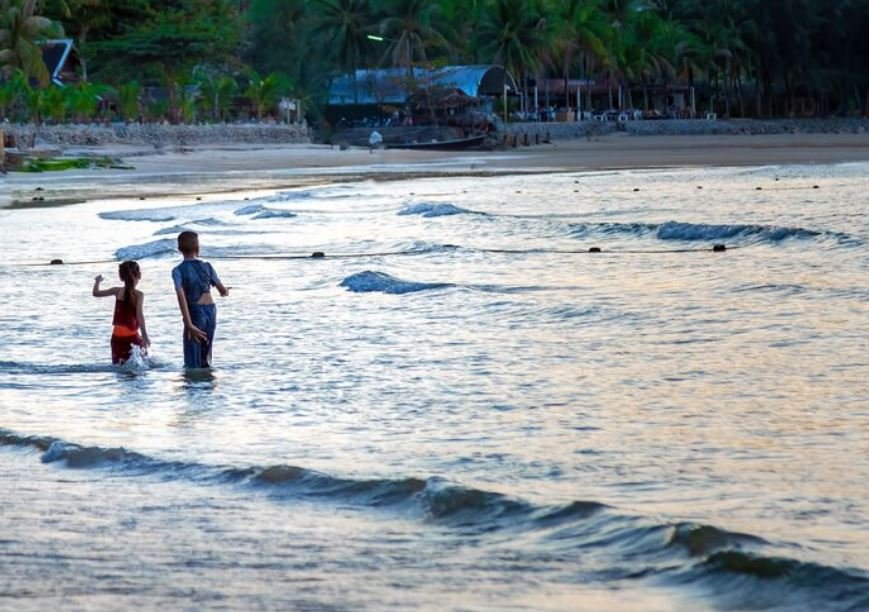
It’s a double whammy, as NOAA oceanographer William Sweet, who has spent years researching high tide flooding, put it in plain terms that have been cited everywhere this spring. Many coastal communities already have water near the brim due to decades of gradual, steady sea level rise. When El Niño strikes, it becomes the second punch, raising sea levels even further, sometimes by six to ten inches in some areas of California. It also transforms regular high tides into events that flood streets, swamp parking lots, and seep into areas where water didn’t previously reach.
The mechanics are almost poetic in their simplicity, so it’s worth pausing to consider how this actually occurs. The Pacific’s trade winds become weaker. Kelvin waves, which are large, slow-moving swells of warm water that travel along the equator and then curve northward along the American coastline, are caused by this weakening. These waves are not the kind that crash on a beach. They don’t shatter. They simply show up, raising sea levels and warming the upper ocean for months at a time. In the meantime, the jet stream moves south of its usual location, carrying storm tracks toward the mid-Atlantic, the Southeast, and the Gulf Coast.
This one is getting a lot of attention from forecasters. The likelihood of a “very strong” El Niño by year’s end is estimated by NOAA’s Climate Prediction Center to be about 63%, with the combined odds of “strong or very strong” rising into the high 80s. The current trajectory could result in effects “unprecedented in the modern era,” according to Daniel Swain, a climate scientist at UC whose blog posts on weather extremes have become required reading in California emergency management circles. This is not because El Niño is new, but rather because it is now layering on top of more than a century of cumulative warming.
Treating these projections like numbers on a probability chart or abstractions is tempting. However, the memories of those who experienced the El Niño winters of 1997–1998 or 2015–16 are typically vivid: mudslides burying hillside roads, flooded intersections in Ventura, beaches in Northern California losing entire dunes overnight due to erosion. Some of the worst coastal erosion California beaches had experienced in years was attributed to El Niño alone in 2015–16. It’s difficult not to wonder if this winter will add yet another chapter to that list.
To be fair, not every El Niño fulfills its promise. Despite massive anticipation, Southern California only received about three-quarters of the anticipated rainfall during the 2015–16 event. Sweet himself is cautious about exaggerating certainty because predicting these systems months in advance is still an imprecise science. However, the risk of flooding feels different from the risk of rainfall because sea level rise is the one constant, whether El Niño or not.
NOAA’s practical advice for coastal towns is fairly standard: monitor the monthly outlooks, check the Coastal Inundation Dashboard, and make appropriate plans. Unattractive things. However, for a beach community outside of San Diego or a fishing town on the Chesapeake, routine preparation might be the only real defense against a problem that has been developing for decades—one that doesn’t require a hurricane to manifest itself, just a regular tide and poor timing.
