

Typically, nothing unexpected happens in the sky over Connecticut. It’s raining. It is cloudy. It gets embarrassingly dark early in the winter. Therefore, most locals were unaware of what they were looking at or that they should have been looking at all when a faint green shimmer started to thread across the northern horizon on the evening of June 8.
Connecticut was able to see the northern lights. Driven into view by a G3 geomagnetic storm that NOAA’s Space Weather Prediction Center had been monitoring for days, the aurora borealis arrived this far south quietly, momentarily, and without much fanfare. On a typical Tuesday, most Americans couldn’t name the government agency that provided them with the only advance notice. It’s an odd circumstance to be in.
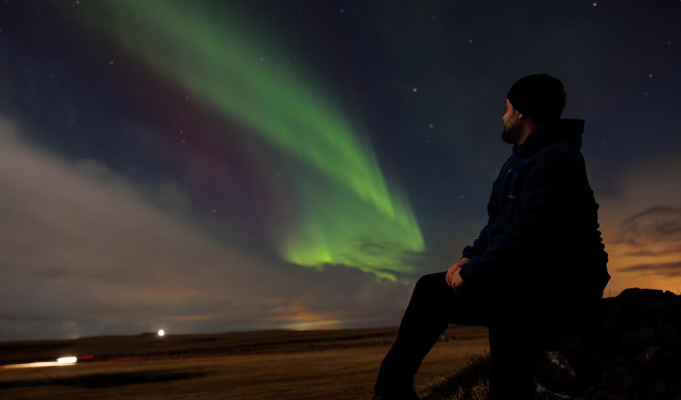
In anticipation of a coronal mass ejection, which is essentially a burst of magnetized plasma launched from the sun, that was predicted to collide with Earth’s magnetic field, NOAA had issued geomagnetic storm watches for June 8 and June 9. The Great Lakes region and portions of the lower Midwest could be affected by the aurora, according to the agency’s prediction. Connecticut is on the periphery of that reach, where the odds are never very high but also not insurmountable. The state had about a 17% chance of visibility that evening, according to the Aurora Reach website. It’s not certain. However, it’s not nothing.
The lights’ appearance isn’t what’s remarkable. G3 storms are not particularly uncommon during a solar maximum, and solar activity has been high throughout this entire cycle. The information pipeline between that prediction and the people standing outside in their backyards was remarkably thin. NOAA sent out warnings. The story was picked up by a few local news organizations. Posts on Facebook went viral. And that was essentially how one of the more spectacular natural occurrences spread to New England over the course of several months.
Finding out you overlooked something lovely because the information was there but not where you were looking can cause a certain type of frustration. The majority of those who saw the lights on June 8 were either already following space weather, had NOAA notification apps installed, or happened upon a local news article at the appropriate time. The following morning, everyone else found themselves in pictures they weren’t in.
The best time to see the northern lights is on a clear night between 10 p.m. and 2 a.m., away from city light pollution. In theory, everyone in Connecticut had access to all of those conditions that night. The early window was clear, but the moon, an 82 percent-lit waning gibbous, would rise after midnight and complicate matters. As CMEs usually do after the initial shock front passes, the storm weakened to G2 levels by June 9, so the first night was actually the best chance.
Whether an improved public alert system would truly alter behavior on a large scale is still up for debate. Individuals have complete lives. A severe thunderstorm warning and a space weather notification from a federal agency land very differently. Even when the forecast is correct, the show is genuine, and the sky momentarily does something worth going outside for, there seems to be a surprisingly large gap between what science can predict and what the public actually acts on.
