

When the topic of Arctic drilling comes up again, a certain silence falls over the conversation. A pause. a slight tightening of the eye area. Those who witnessed the Kulluk run aground on live television in December 2012 after its towline snapped in choppy Alaskan water, and who witnessed Shell spend seven billion dollars and come away empty-handed, often carry that memory with them. The oil industry has a tendency to appear overconfident in the Arctic.
And yet, here we are once more. Once again, oil companies are pushing into waters at the northern edge of Alaska’s already heavily industrialized North Slope, requesting permission to drill in the deep Beaufort Sea. Even industry veterans were taken aback by the Trump administration’s aggressive strategy of leasing environmentally sensitive lands and waters to fossil fuel companies. Since its discovery in 1968, the area surrounding Prudhoe Bay has evolved from an endless tundra to the largest industrial hub in the state, interspersed with gravel roads, pipelines, and drilling pads. The current proposal would push that footprint farther north into error-forgiving water.
It has always been difficult to understand economics. In the words of Scotiabank commodities analyst Patricia Mohr, “operating in cold, sensitive Arctic environments essentially doubles capital expenses.” You’re not merely drilling. Equipment that can’t just be moved to the Gulf of Mexico at the end of a season is what you’re purpose-building. In the event that a blowout necessitates an immediate relief well, you are keeping a second rig on standby at all times, which is required by law in both Canadian and American Arctic waters. It’s not a cheap second rig. Furthermore, there is an excruciatingly short window of time to use any of this equipment. Sometimes a single well can be drilled in just two summer seasons. Ten years may pass before that well yields anything commercially viable.
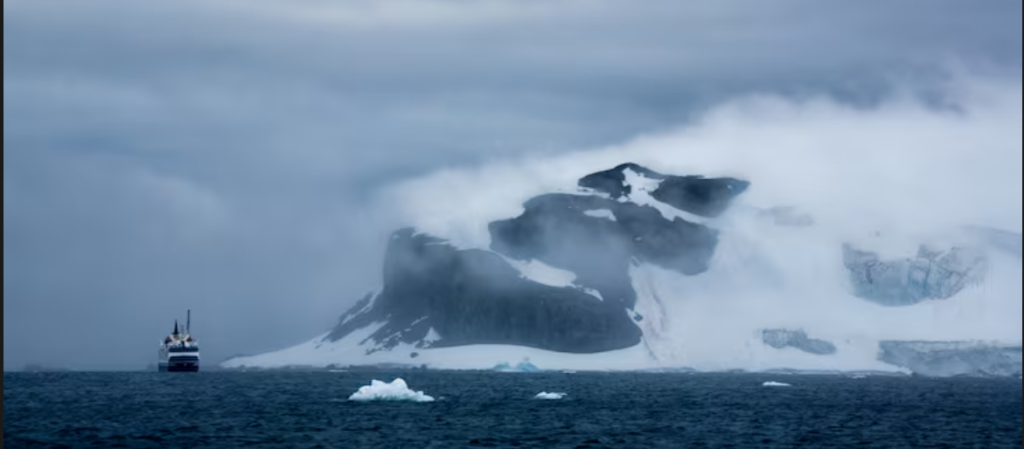
The recent push might be an indication of sincere hope for what lies beneath the Beaufort’s floor. However, some of this momentum seems to be political rather than geological. The National Petroleum Reserve-Alaska, which is located in the Western Arctic, has already expanded thanks to initiatives like Willow. Just to the east is the Arctic National Wildlife Refuge, which is home to the Porcupine Caribou calving grounds and Indigenous communities whose way of life revolves around that migration. Beyond those nearshore gravel islands, the Arctic Ocean is still the last largely unexplored area, and that’s precisely where some of the recent interest is focused.
It’s more difficult to pinpoint exactly what distinguishes this moment from Shell’s retreat ten years ago. The price of oil has rebounded. In Washington, attitudes changed. Physical realities, however, have not. The geology is still poorly understood; portfolio manager Laura Lau, who has visited the Arctic, once referred to it as “drilling blind,” a term that should make anyone granting permits take notice. The ice is still erratic. The environmental groups that previously engaged in this conflict are still observing, and they may be more organized now than they were when Shell came with billions and departed with nothing.
Observing all of this, it seems as though the dispute was never truly resolved. When sanctions, low prices, or straightforward logistics made the math impossible, Exxon, Chevron, and BP all retreated. Not because they gave up on the concept. There are actual reserves in the Beaufort Sea. The industry is aware of this. Whether extracting them is worth the risk to a coastline that is difficult to repair once damaged is the question that keeps getting postponed. It’s still unclear if anyone in a position of authority is actually considering that question at this time, or if the permits will just proceed because the political wind is in their favor. This is not the first time the Arctic has visited. It is awaiting the next development.
