

The majority of people will never see or consider the world beneath the Pacific Ocean, and until recently, science itself hardly acknowledged its existence. It starts about 650 feet below the surface, where sunlight silently fades away. Below that barrier, bizarre creatures float through almost complete darkness: translucent beings with massive eyes, bioluminescent organisms that pulse softly like broken streetlights, and species so new to science that they haven’t even been given names yet. This is the midwater zone, which is half twilight and half midnight, and it is currently in the direct line of an industry that is interested in what is beneath it.
The bulk of life in the area that deep-sea miners are targeting is completely unknown to science, according to NOAA research, which is almost unsettling. Not badly researched. not understudied. brand-new. Not described. Not known. We are contemplating extensive industrial extraction in an ecosystem that we can hardly map, let alone comprehend, so the implications are difficult to overstate.
The attraction is the Clarion-Clipperton Zone, a large area of seafloor southeast of Hawaii covered in polymetallic nodules, which are roughly potato-sized clusters of nickel, cobalt, and manganese that develop over millions of years around the tiniest nuclei, such as a shark’s tooth or a piece of shell. Batteries for electric cars, cellphones, wind turbines, and military hardware all require these metals. Sitting there in the dark, the nodules symbolize a vast reservoir of materials that the modern world is becoming more and more dependent on. With a mining application reportedly targeted at the ISA by late June 2025, companies like The Metals Company and Nauru Ocean Resources Inc. are moving toward full-scale commercial operations and have already finished the first full test of an integrated nodule collection system in the zone.
To be honest, the suggested process’s mechanics are intrusive. Crawling across the seafloor, collector vehicles churn sediment into clouds and scrape up nodules. Nodules are separated from the mixture of water, sediment, and debris on a surface ship after the material is piped up through thousands of feet of water column. The remaining waste, which includes the crushed nodule fragments and the stirred-up sediment, is then released back into the ocean at a depth of about 4,000 feet, resulting in what scientists refer to as sediment plumes. Imagine dense, dark clouds of fine debris drifting with currents that scientists do not yet fully understand as they spread through the water column instead of lava. Those plumes might be able to travel hundreds of miles. Where they would finally settle and what they would coat along the way are still unknown.
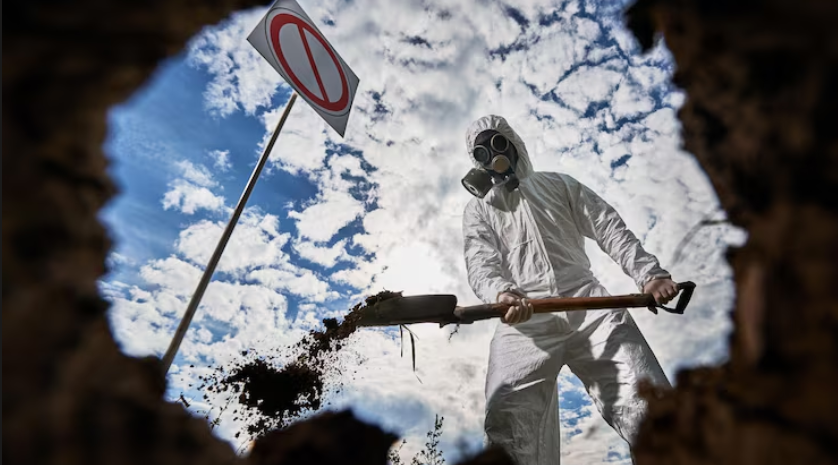
This is especially concerning because of the midwater ecosystem. Here, whales feed. The animals in this area are essential to the survival of tuna, the type that is regularly harvested from commercial fishing vessels. The food web that runs through this gloom is intricately linked in ways that scientists are still trying to figure out. It is not a risk to interfere with the feeding habits of animals that have not even been classified. In many respects, that is a risk being taken in the dark.
When it meets in July 2025, the International Seabed Authority—which was founded in accordance with the UN Convention on the Law of the Sea back in 1994—is anticipated to discuss mining laws, policies, and benefit-sharing arrangements. There’s a sense that the economics are moving more quickly than the science and definitely more quickly than the caution the situation deserves when you watch the timeline compress like this—companies submitting applications while the regulatory framework is still being written.
Here, it’s difficult to ignore the parallel. This is essentially the same pattern that occurred with deep-water extraction projects, offshore oil drilling, and hydraulic fracturing, all of which advanced quickly before the complete picture was known. The distinction is that the deep sea takes longer to recover at these depths. No human timeframe will allow nodules that took millions of years to form to grow back. Furthermore, it is impossible to put unnamed species on an endangered list.
Researchers are quietly questioning whether the world is prepared to risk the collapse of portions of an ecosystem that it hardly understands in order to obtain materials that are essential but not irreplaceable through other means. They are also having difficulty persuading policymakers to take this question seriously. There’s no simple solution to that. However, before the collector vehicles begin to move, there should, at the very least, be a longer pause.
