

Early in May, there’s a certain quiet on the Richardson Highway that makes you think the season has finally changed. Glennallen has a gravel-like scent. The lowlands are loosening, but the Wrangells continue to wear their snow. Every few years, a Bering Sea low determines that spring can wait. It appears that this weekend is one of those occasions.
On Thursday, May 7, the National Weather Service Anchorage office issued a Winter Storm Watch in addition to advisories and high wind warnings that were already in effect from Bristol Bay into the eastern Aleutians. The Eastern Alaska Range backcountry may receive up to three feet of snow, with 12 to 18 inches falling at highway level between Glennallen and Delta Junction. Gusts of up to 90 miles per hour are predicted to roar through channels on the Alaska Peninsula. When the forecast is read aloud in a roadhouse, everyone falls silent for a moment before someone remarks, “Well, that’s May for you.”
In order to explain why Alaska’s shoulder seasons can be more hazardous than its winters, forecasters use a textbook-style setup on whiteboards. After a deep low parks itself off the Aleutians and pulls Pacific moisture northeast, the Alaska Range lifts, cools, and extracts the moisture. The meteorologists refer to it as orographic enhancement. Isabel Pass is simply referred to as the state’s worst luck by those who drive there for a living.
The window that no one should overlook is Sunday morning through Monday afternoon. On the Glennallen-to-Delta stretch, that’s when the snow hits hardest, when fresh accumulation meets steep grades, and when shaded areas above 2,500 feet refreeze into glaze ice that doesn’t care how much your tires cost. Observing the model runs, it seems as though the maintenance teams are already familiar with how this operates. During spring upslope events, AKDOT&PF windows tighten rapidly. They must.
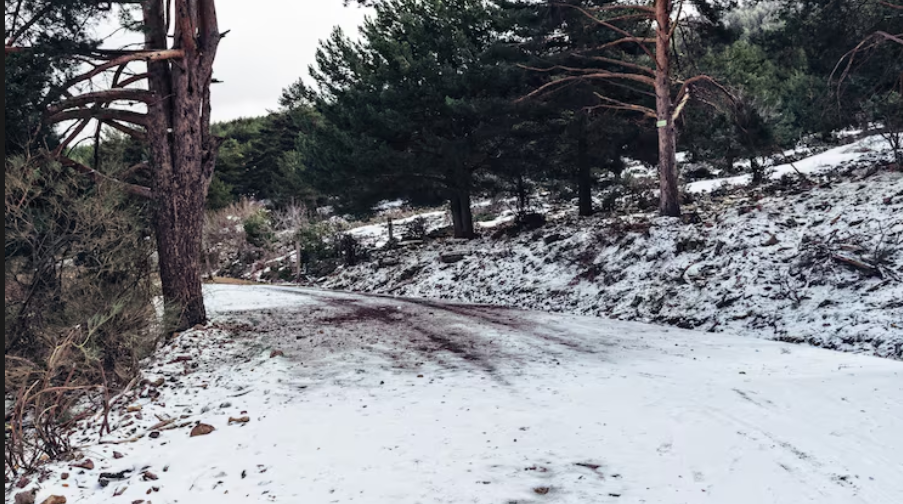
The bare minimum is being done by drivers who check Alaska 511 before they depart, and even then, the live cameras only provide a mile’s worth of footage. The remaining 200 are speculative. It’s important to remember that, despite being promoted as the solution to every problem, all-wheel drive isn’t. AWD facilitates acceleration. It doesn’t assist you in stopping. Tread depth, tire compound, and the speed you selected two minutes ago take precedence over the distinction between AWD and 4WD on glaze ice, a downhill grade, and in dim light.
Little things are more important than most people realize. In essence, snow tires with less than 4/32 inches of tread are summer rubber undercover. Many drivers leave a warm garage with under-inflated tires and forget to check because cold air bleeds tire pressure at a rate of about one to two PSI per ten-degree drop. The stopping distance on packed snow is about three times greater than that on dry pavement, and most people haven’t really tested that on an empty road, if they’re being completely honest.
The storm spreads its weight beyond the Richardson. Through Sunday morning, the Lower Kuskokwim Valley is expected to receive nine to thirteen inches. North of King Salmon, Bristol Bay anticipates eight to twelve. Pribilofs and the eastern Aleutians prepare for gusts of up to 80 mph. The Kuskokwim Delta Coast appears to be 75. This movie has been seen before in communities like Kotlik, Scammon Bay, and Hooper Bay, but late-season storms always carry an additional risk: wet snow falling on warm pavement, then refreezing overnight. The day appears to be manageable. The night doesn’t.
The Richardson experiences its worst damage from Sunday night into Monday morning during the Winter Storm Watch, which is in effect from Sunday morning through Monday afternoon. Discussions at NWS Anchorage have already indicated that a second Bering Sea low is scheduled for midweek, suggesting that the same corridors may receive additional assistance. Although the second system’s level of organization is still unknown, anyone planning a long-distance drive through the Interior next week would be well advised to keep an eye on things. In Alaska, spring never quite comes on time. It occasionally appears wearing a winter coat to serve as a reminder of who is in charge.
