

Photographs of the nodules appear unremarkable; they are lumpy, dark, and about the size of a potato, dispersed over a muddy seafloor four miles below the Pacific’s surface. At a beach, no one would give them another glance. However, they constitute one of the world’s most concentrated battery metal deposits down there, in the almost freezing darkness between Hawaii and Mexico. manganese, nickel, cobalt, and copper. The materials that end up in electric vehicle batteries, solar infrastructure, consumer electronics. They were referred to as “an EV battery in a rock” by an Australian mining executive who had a salesman’s eye for a good line. The description is accurate. It’s simply not complete.
What grows on, beneath, and around those nodules is what the pitch omits. In the Clarion-Clipperton Zone, a 4.5 million square kilometer area of abyssal plain that the International Seabed Authority has been distributing exploration contracts for years, scientists have identified over 400 species. Researchers treat xenophyophores as ecological bellwethers because they are massive single-celled organisms that are sensitive to changes in their surroundings. Sea cucumbers. Corals. Dumbo octopuses. Mollusc species that do not have a genetic match in any public database worldwide. Between 88 and 92 percent of the benthic species in the CCZ are thought to be officially undescribed. In one exploration area, a single 30-by-30-kilometer survey box revealed over a dozen potentially new taxa. In a region the size of Western Europe, that is one box.
It is currently being mined by the United States. Using a 1980 statute that was first passed as a temporary measure while international negotiations were still in progress, President Trump signed an executive order in April 2025 directing NOAA to expedite the permitting process for deep-sea mining beyond national jurisdiction. A few days later, the Canadian company The Metals Company, claiming to be the first in the world to do so under any national authority, submitted an application through its U.S. subsidiary, TMC USA, to start commercial nodule extraction in the CCZ. In response, the International Seabed Authority, the UN agency officially in charge of overseeing this area of the ocean floor, made it clear that unilateral exploitation of resources that belong to all of humanity is forbidden. Because the United States is not a party to the Law of the Sea Convention, the legal landscape is significantly complicated. Regarding the obligations that a non-signatory government may have under customary international law, scholars cannot agree. It is undeniable that the rules-based structure that the United States assisted in creating is currently undergoing internal testing.
| Field | Details |
|---|---|
| Location | Clarion-Clipperton Zone (CCZ) — Eastern and Central Pacific Ocean, between Hawaii and Mexico |
| Size | ~4.5 million km² (~1.7 million square miles); stretches ~7,240 km east to west |
| Depth Range | 4,000 to 6,000 meters (roughly 13,000–20,000 feet) |
| Governing Body | International Seabed Authority (ISA), under UN Convention on the Law of the Sea (UNCLOS) |
| Mineral Wealth | Estimated 21 billion tons of polymetallic nodules — containing manganese, nickel, copper, cobalt |
| Mining Contracts Issued | 19 ISA exploration licenses covering ~1.125 million km² of CCZ seabed |
| U.S. Action | January 2026: NOAA finalized rule to accelerate deep-sea mining permits under a 1980 U.S. statute |
| First Commercial Applicant | The Metals Company (TMC), Canada — filed via subsidiary TMC USA; described as a “world first” |
| Triggering Executive Order | Trump Executive Order, April 2025 — “Unleashing America’s Offshore Critical Minerals” |
| Biodiversity | 400+ described species; 42% of known deep-sea species first discovered in CCZ; up to 92% of benthic species still undescribed |
| Nodule Growth Rate | 1–10 millimeters per million years — effectively irreplaceable on any human timescale |
| 2025 Mining Test Finding | Significant reduction in fauna abundance and species richness in tested areas |
| Conservation Areas | 13 Areas of Particular Environmental Interest (APEIs) designated by ISA — adequacy disputed |
| Legal Status of U.S. Mining | Contested — U.S. not party to UNCLOS; ISA called unilateral mining “prohibited” |
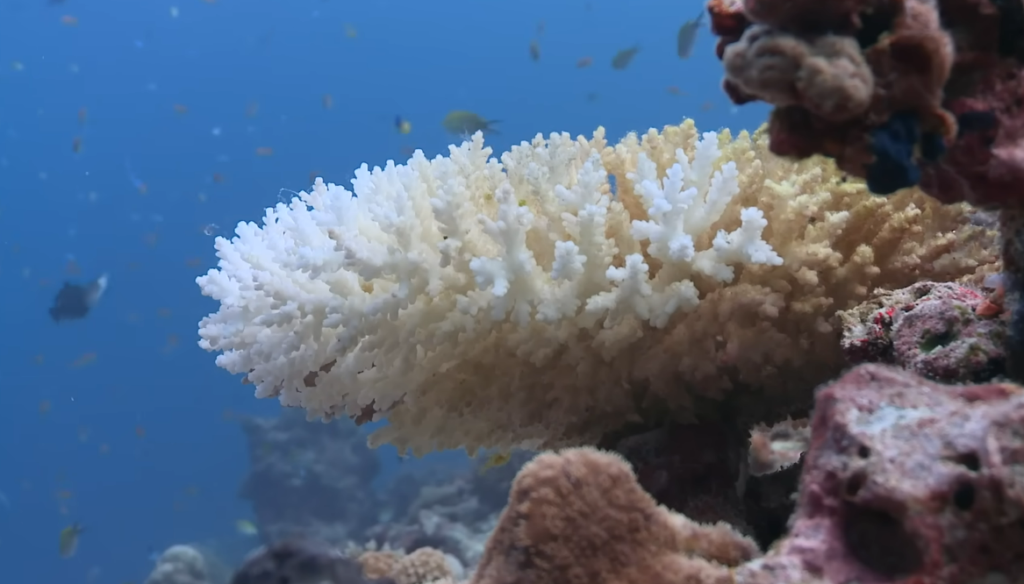
The speed at which all of this is happening seems to be surpassing science in ways that ought to unnerve people. A mining disturbance test conducted back in 1978 left sediment in the CCZ that had still not resettled more than two decades later. Significant declines in the diversity and abundance of fauna in the impacted area were discovered in a 2025 study that looked at a more recent test. The nodules themselves grow at a rate of one to ten millimeters per million years, so anything that is scraped away is essentially lost. forever. And that’s not even taking into consideration the sediment plumes, which can move through thousands of meters of water column vertically and hundreds of kilometers horizontally, as well as the noise, light, and density of mining vessels that limit access to fishing grounds.
This particular tension in the clean energy debate is difficult to ignore. In order to construct batteries and power grids for a world with fewer emissions, the minerals found in those nodules are actually necessary. That reasoning is valid and shouldn’t be disregarded. However, it is inconvenient given that scientists are still actively mapping the ecosystem under consideration for extraction, finding new species practically every time they send a vehicle down. Scientists have only sampled a small portion of the CCZ’s total area, according to a 2025 New York Times article that detailed a survey that found 788 species of macrofauna there. Over half of the species that have been gathered are new to science. Permission to operate in a library where the majority of the books have not yet been read is being requested by the extraction industry.
This is more difficult to resolve in a clean manner due to the governance gap. The deep seabed outside of national borders was recognized by UNCLOS as the “common heritage of mankind” in 1967. This legal concept was based on the notion that no nation should be able to claim or exploit resources that, in theory, belong to everyone. For the good of all people, the ISA oversees those resources. One of the countries that designed this system was the United States. Although it never ratified the treaty, it acted as though it accepted the framework for many years. This assumption is currently being put to the test, and if mining continues under U.S. unilateral authorization, a number of countries whose businesses have collaborated with The Metals Company may be subject to legal action at the International Tribunal for the Law of the Sea in Hamburg.
It’s genuinely unclear what will happen next. The legal issues remain unresolved, the regulatory apparatus moves slowly, and science is still catching up to the scope of what is being suggested. As this develops, it seems as though decisions are being made at a rate that the ecosystem in question is essentially unable to keep up. It took millions of years for the nodules to form. They are home to species that have never come into contact with an industrial machine. Additionally, the sediment does not immediately settle back down after being disturbed. That does not negate the need to make difficult decisions regarding the extraction of minerals. It could be a justification for producing them with greater care.
