

Witnessing the gradual disappearance of something ancient evokes a certain kind of dread. For hundreds of millions of years, coral reefs have endured ice ages, asteroid winters, and seas that have risen and fallen more times than anyone can remember. However, at some point in early 2023, the ocean’s temperature rose to a point where those reefs were unable to survive. The fourth global mass coral bleaching event in recorded history ensued, and even though scientists think it is over, the word “over” seems overly optimistic.
After months of monitoring following the severe bleaching episode off Western Australia earlier that year, NOAA formally confirmed in mid-2025 that the event had probably ended. 84% of the world’s coral reef area across all three major ocean basins was affected by the crisis, and that Australian stretch of reef damage is now being described as the likely culmination. Mass bleaching was reported in 83 nations and territories. Nothing in history is comparable in scope and intensity.
When the announcement was made, Derek Manzello, who oversees NOAA’s Coral Reef Watch program, used cautious language. He clarified that before scientists could declare with certainty that the event had ended, they had to verify that no reports of widespread bleaching had been made during the austral summer, which runs from December 2025 to February 2026. In one way, that kind of methodical caution is comforting. It’s telling in another. Because bleaching is becoming so commonplace, it has become more difficult to pinpoint the exact “ended” threshold. In the words of Manzello, “We are now in the era where reefs will bleach on a near-annual basis.”
A moment should be given to that sentence. It’s a near-annual basis rather than a near-decade or generational cycle. The previous record-holder, the third global bleaching event, affected 68.2% of the world’s reefs over the course of three years, from 2014 to 2017. It’s difficult not to feel that every subsequent crisis is less of a shock and more of a pattern that scientists are quietly, soberly learning to document rather than prevent. The event that just ended went far beyond that.
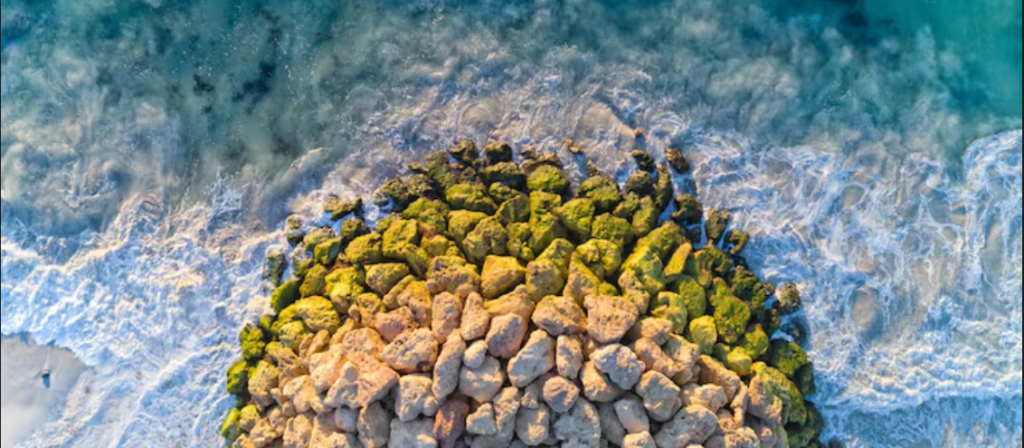
However, there is some truly fascinating science taking place on the periphery. Even when the surrounding ocean temperatures rose into hazardous ranges, not all reefs bleached. Researchers are currently investigating those holdout locations in an attempt to determine what combination of genetics, water circulation, depth, or local conditions gave some corals a degree of resistance. This is puzzling in the best way possible. It’s a chance to enhance restoration tactics, according to Jennifer Koss, Director of NOAA’s Coral Reef Conservation Program. There might be something beneficial in those colonies that are still alive. It’s still unclear if it can be scaled.
It’s easy to be pessimistic about the announcement’s timing, which falls during National Ocean Month and right after World Reef Awareness Day. Awareness days don’t usually alter results. However, the fundamental idea is true: coral reefs are more than just attractive settings for photos related to dive tourism. In dozens of nations where there are no clear alternatives, they maintain fishing and tourism economies, protect coastlines from wave damage, and support massive biodiversity.
The El Niño signal developing in the distance is what makes this moment feel especially dangerous. According to NOAA’s four-month bleaching forecast, high-risk conditions are already emerging throughout the north Pacific, including Hawaii, and will eventually spread to Florida and the Caribbean. Every significant El Niño event since 1998 has led to an increasingly severe global bleaching crisis. If that pattern continues, there might not be enough time between the conclusion of the fourth event and the start of a fifth. It turns out that, despite the lack of attention from the outside world, the ocean has a very long memory.
